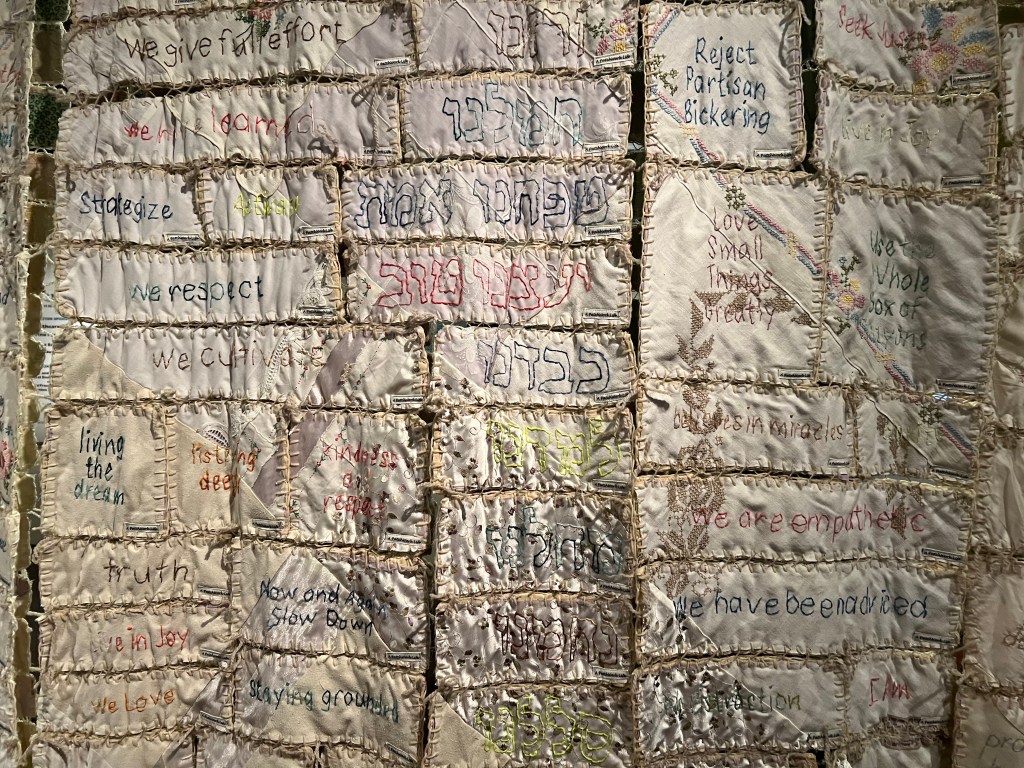
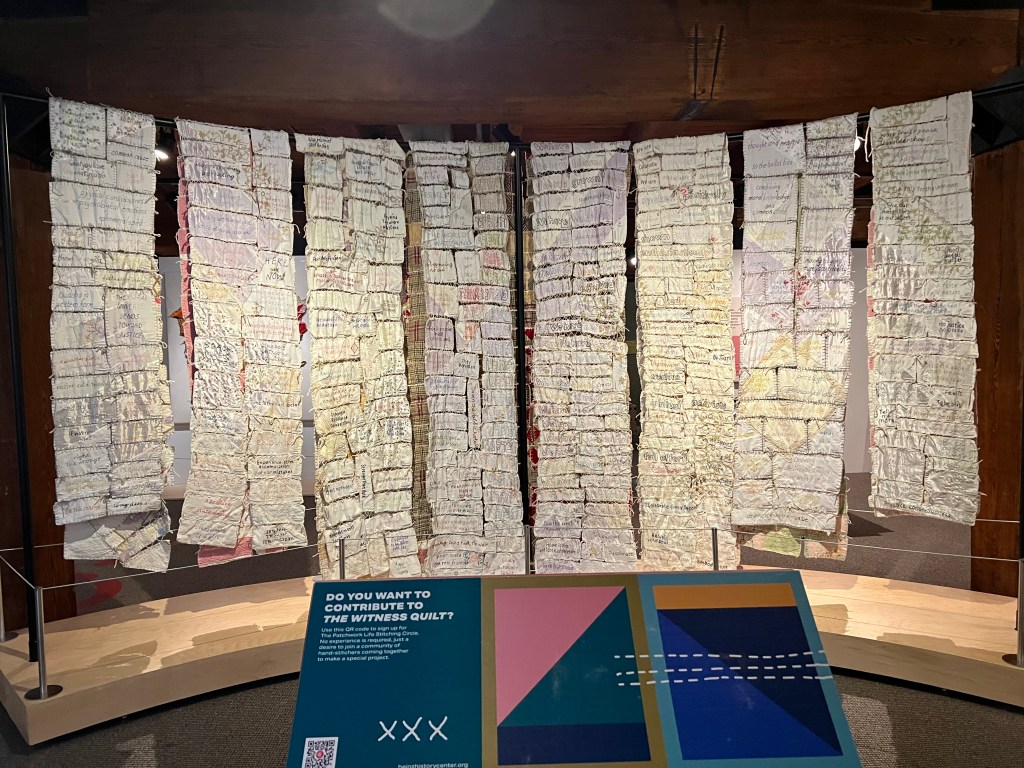
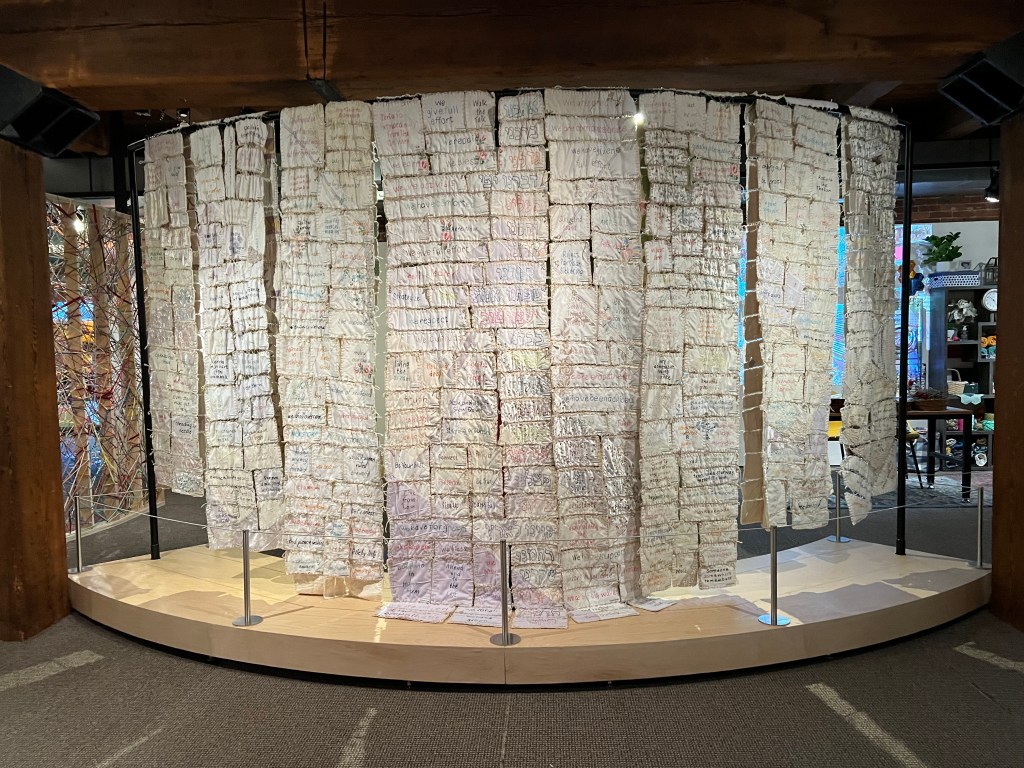
Vidui, the spiritual center of the Yom Kippur liturgy, is a confessional prayer at the boundary of personal and communal responsibility. It is an alphabetical inventory of misdeeds, recited in the first-person plural: We have sinned. We have transgressed. We have stolen. It describes a brokenhearted world, desperate for atonement. These words have become so essential to Jewish spiritual life that they are the basis for last rites.
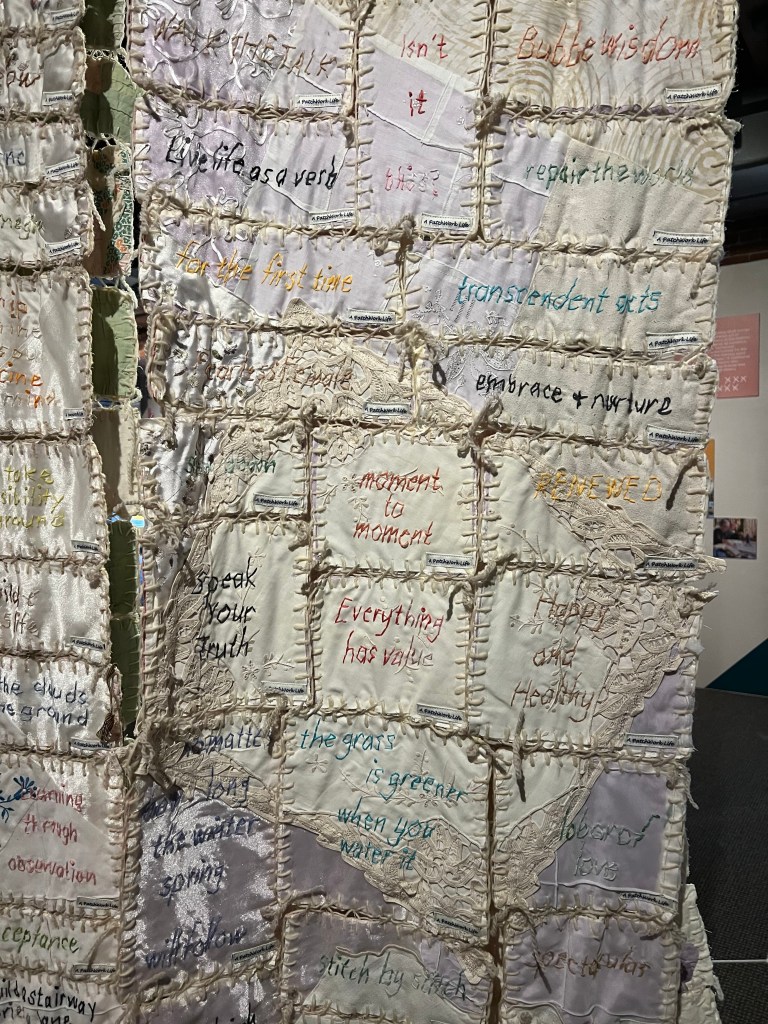
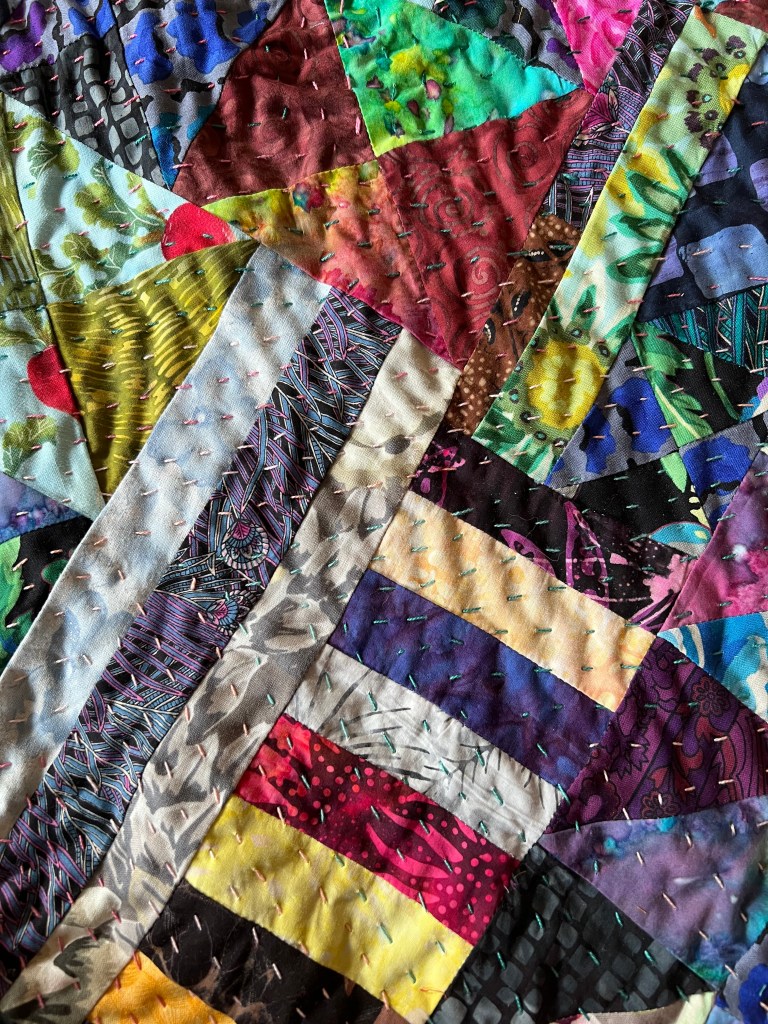
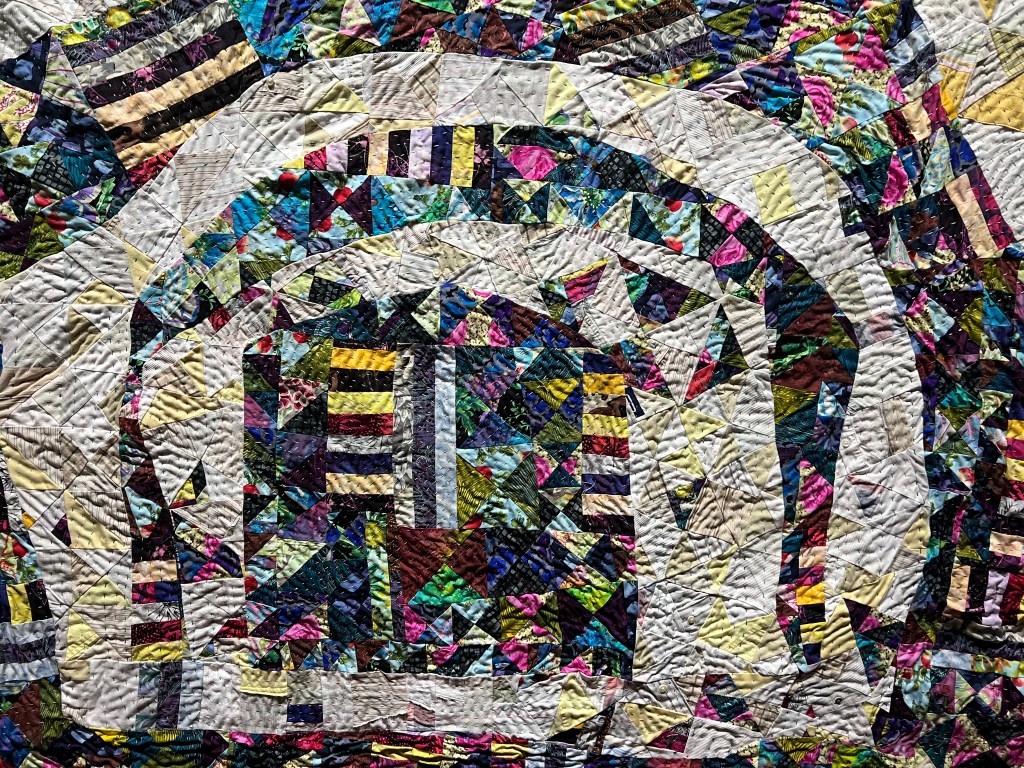
I created “The Witness Quilt” to transform the experience. The all-white under layer, traditionally worn during Yom Kippur as a kittel, is embroidered with a “positive vidui” created by Rabbi Avi Weiss: We have love. We have blessed. We have grown. If confessing misdeeds is a way to acknowledge failings, confessing good deeds may be a way of setting a path forward. La Shana Tova!
Start/End each encounter with namaste, along with Añjali Mudrā, the gesture of folding hands. 🙏🏾🙏🏾
Do not say anything to beggars and people selling on the street, including no thank you. It is best to simply ignore them. Any acknowledgment, positive or negative, encourages them.
India is our host. We are the guests. Find the culture in the history. Observe a Temple service. Explore the difference G@ds. Discover common ground.
Engage with people (except the beggars and the street sellers). These encounters are always informative and often lead to new opportunities. Accept the opportunities as they appear.
Be prepared for heat. Drink only bottled water. Take along every type of stomach medicine and a dose of antibiotic in case of travelers sickness/Delhi Belly.
Go with the flow. Nothing is in your control and trying to make it so will spoil your experience. BE HERE NOW.
Be yourself. Acknowledge your thoughts. Express your feelings. Face your fears. Accept your karma. Maintain faith in all-beings, especially cows.
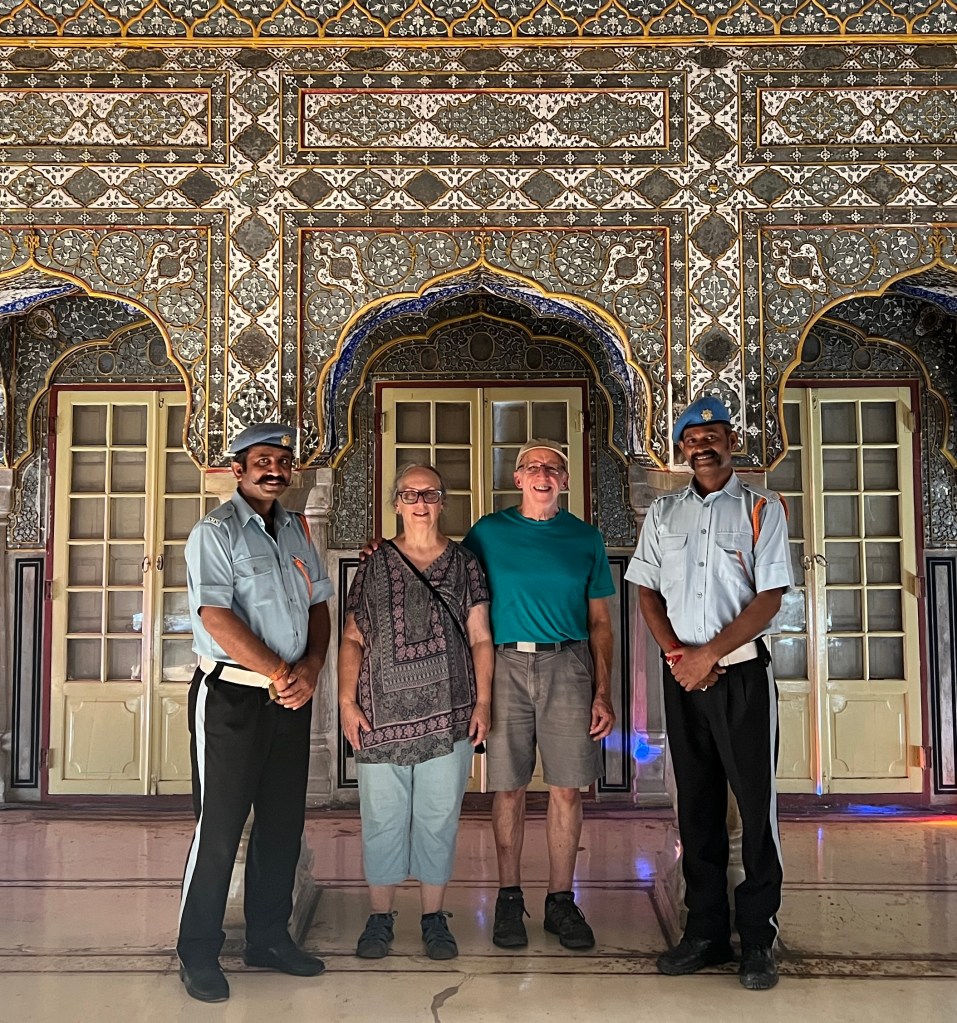
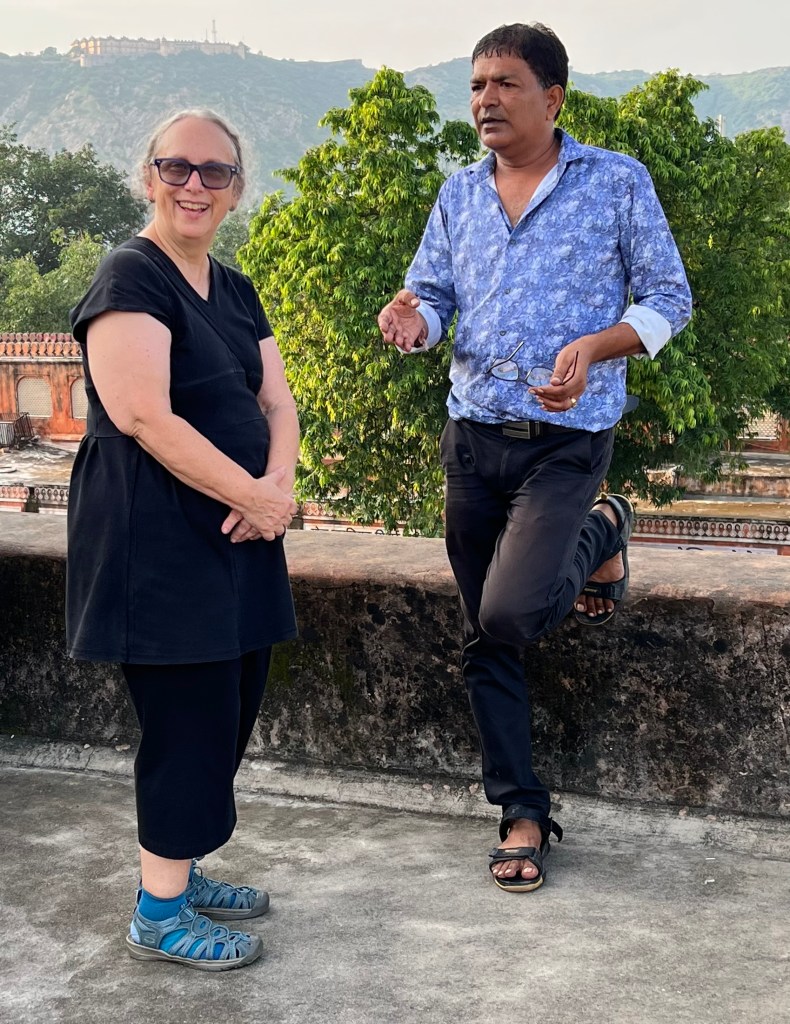
Jaipur is the capital of India’s Rajasthan state. It evokes a sense of royalty, stemming from its pink trademark building color. Staying in a restored hotel near the opulent royal residence City Palace, we met a guide who took us through the palace, shopping, and then to the evening Temple celebration.
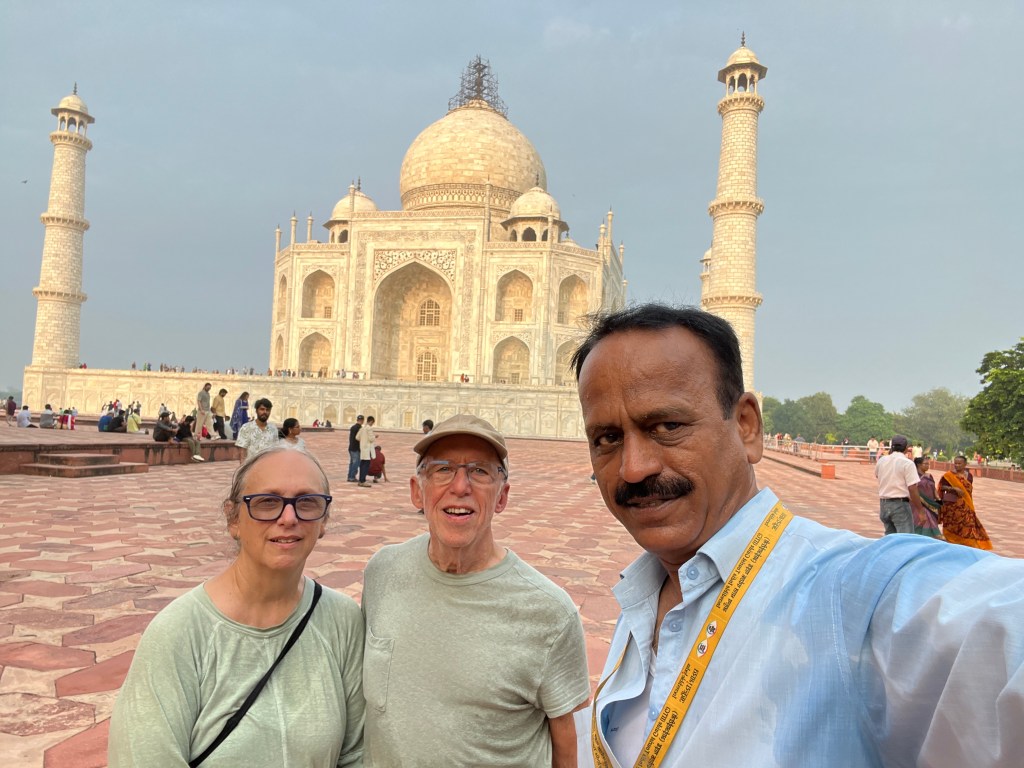
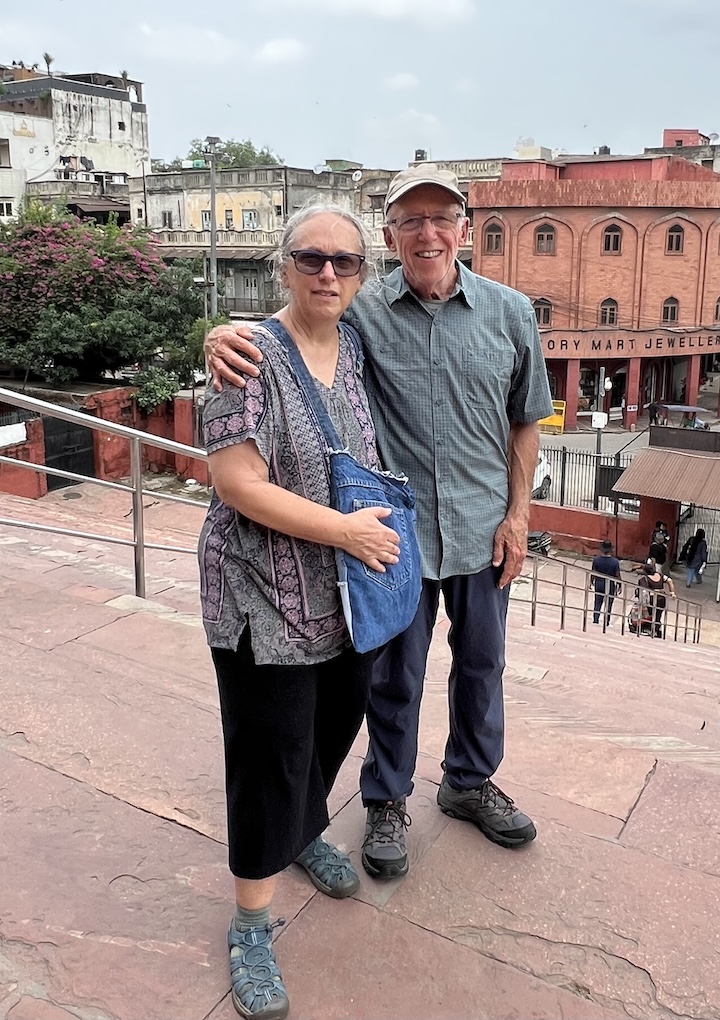
The next day, we met another guide and his trusty Tuk-Tuk driver who took us to a block-printing textile museum and to meet an organic spice dealer who also supported a children’s learning initiative. Later in the day we met a Jeweler and his brother who referred us again to the evening Temple service. The next day, another guide took us through Fatehpur Sikri on our way to Agra. Finally, early this morning another guide took us to see the Taj Mahal at sunrise.
This series of encounters brings us to a confluence of acceptance with ourselves, each other, and all beings. India is a magnificent place, a world unto itself, to be experienced first hand, awesome and wondrous, as we will ever know. Namaste 🙏 🙏🏾
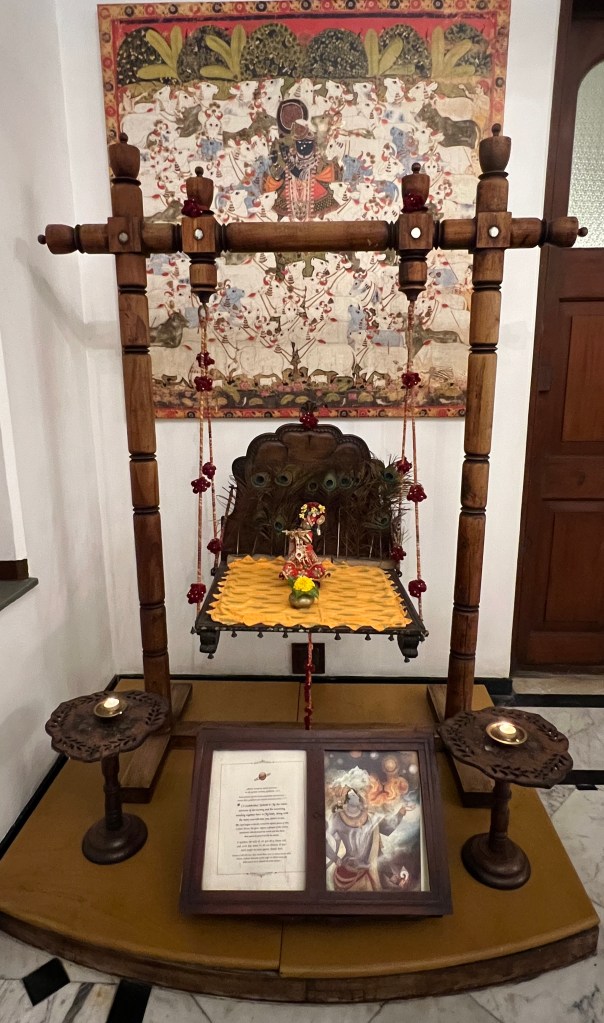
Alters & shrines adorned with flowers, incense, and other offerings are everywhere. It’s like the impromptu memorials we create along the roadside for loved ones, but much more elaborate, permanent, and in this case, dedicated to deities. This one in our hotel, honors Krishna, the embodiment of divine love & joy, destroyer of all pain & sins. Krishna is the main hero in the epic, Bhagavad Gita.
Here are three examples of the plethora of Hindi G@ds. Brahma, the g@d of creation contains the entire cosmos, reminding us that the cycle of birth and death is constant and ceaseless. Vishnu, depicted with four arms, preserves and sustains life, adhering to principles, order, righteousness, and truth. They encourages his devotees to show kindness and compassion to all creatures. In a trinity with Brahma and Vishnu, is Shiva, with a serpent around their neck, representing Kundalini life energy while eliminating physical and spiritual negativity.
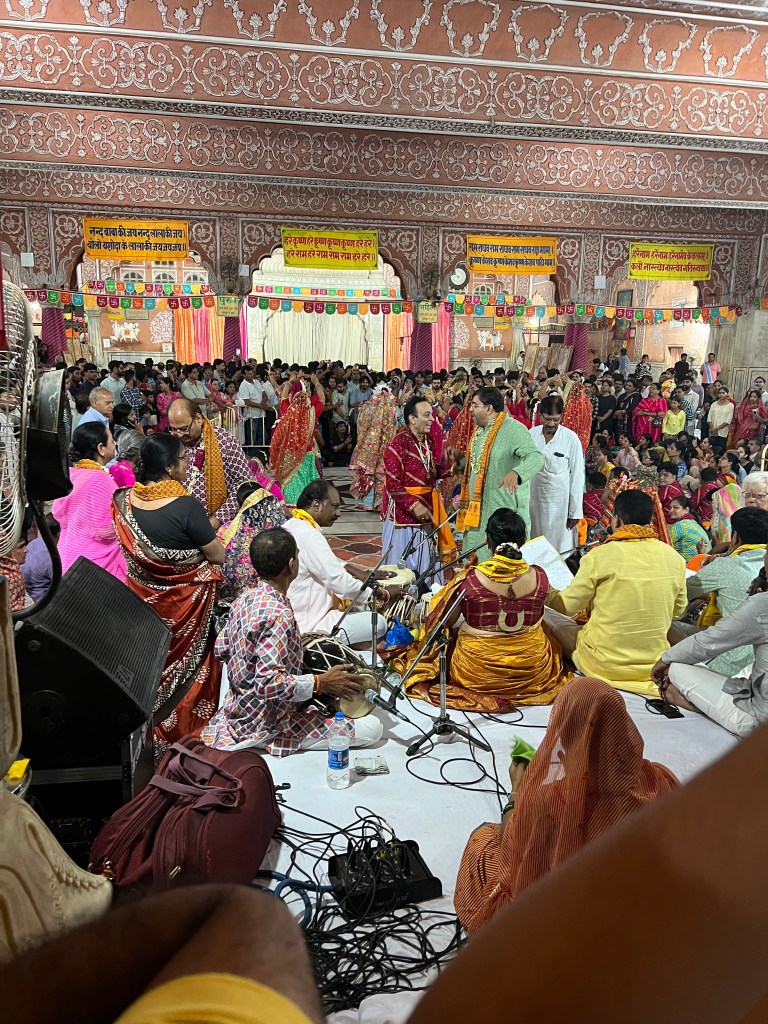
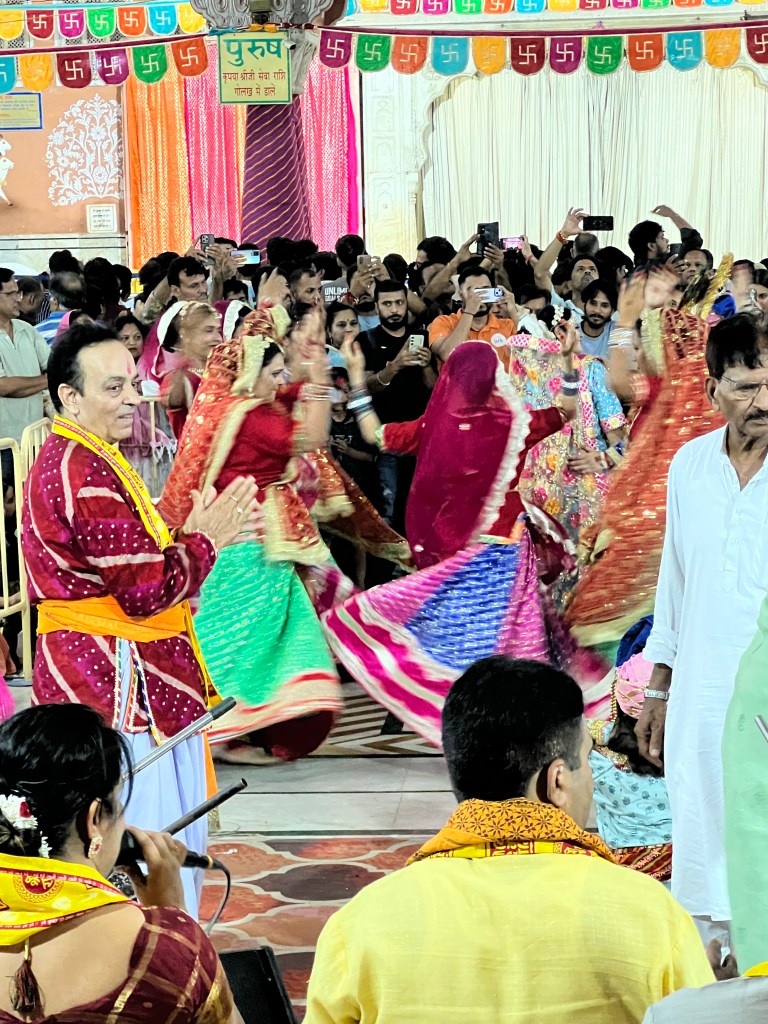
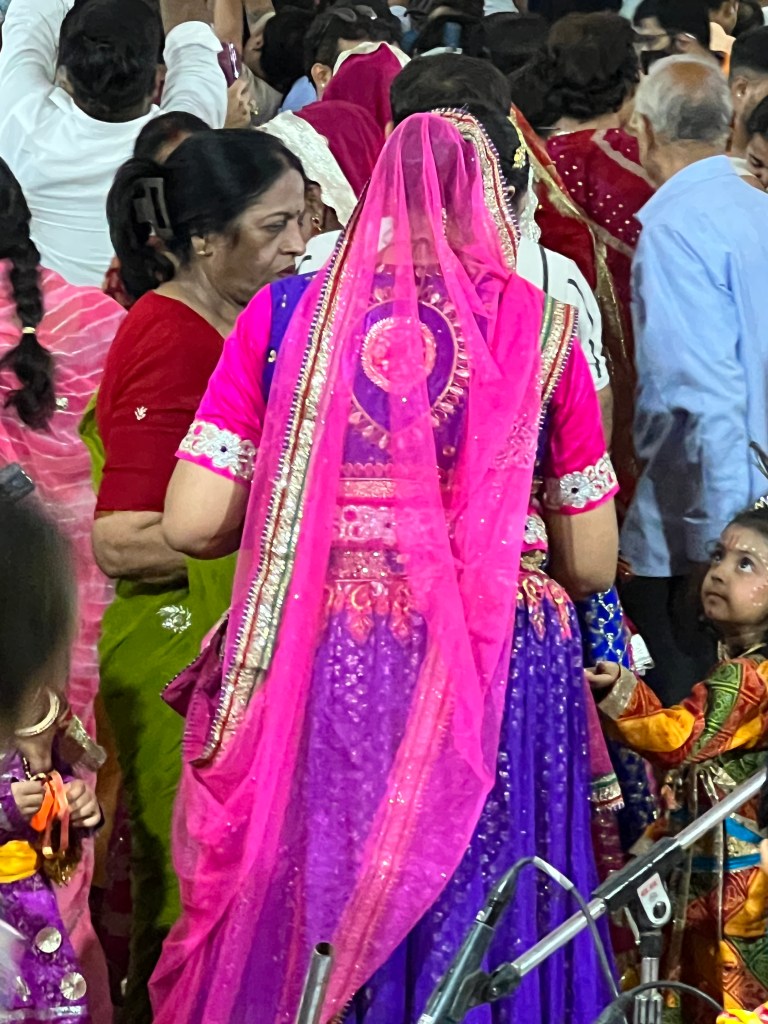
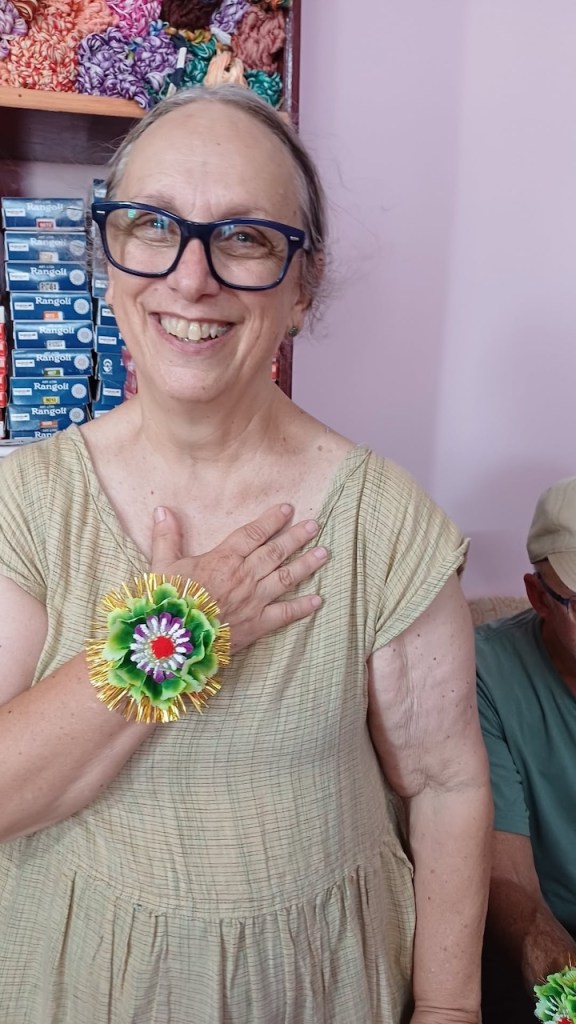
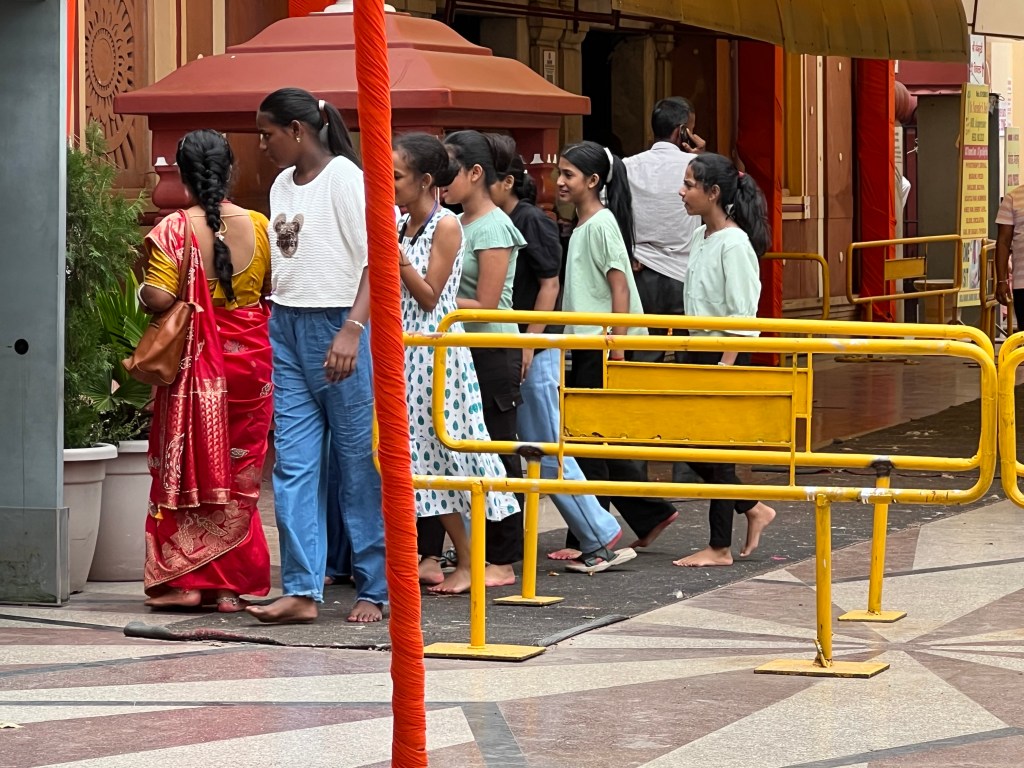
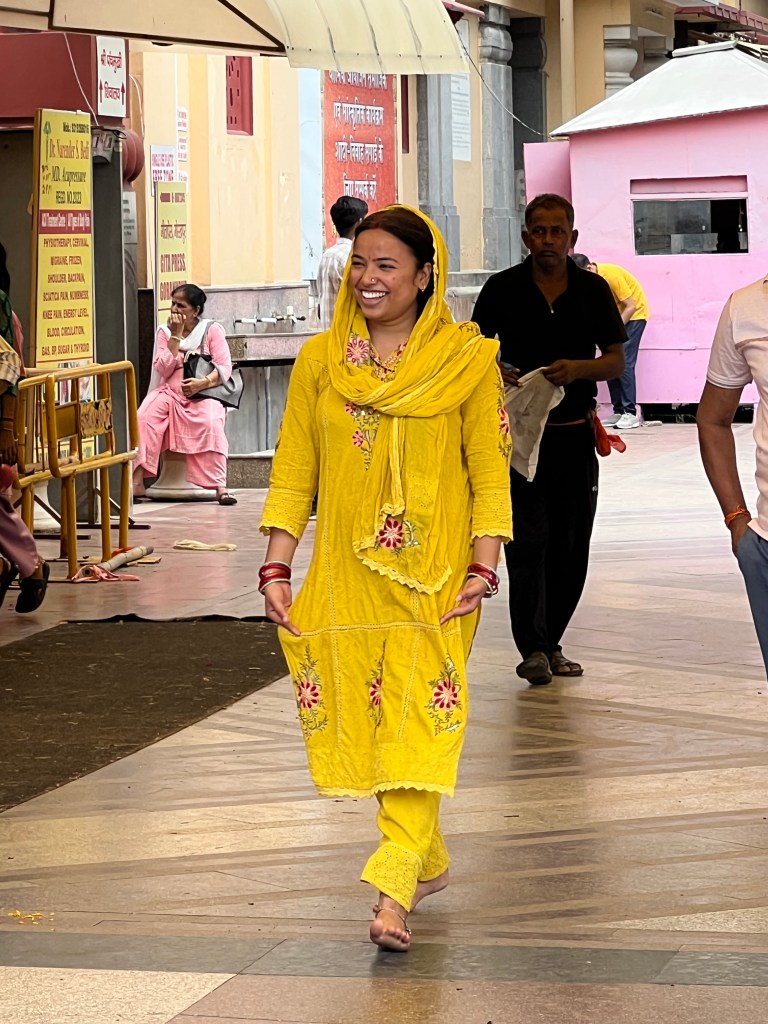
I could define many others, but as fate would have it, we are in Jaipur, Rajasthan as women celebrate the reunion of Lord Shiva and Goddess Parvati in the Teej Festival. At the temple, we witnessed women dressed in vibrant traditional attire, singing folk songs, praying for the long life of their husbands and husbands-to-be. I think this is the closest I will get to Shekinah in this experience, of course, with the exception of being with the women doing handwork!! Steve’s photos of Teej:
As many shrines as we saw, there are many more cows prevalent everywhere on the streets. They are referred to as “Gau Mata,” Mother Cow. Reverence for cows is rooted in ancient texts and traditions as symbols of nourishment, purity, and kindness, reflecting the Hindu principle of non-violence and respect for all living beings. Hindu traditions believe that 33 crore (330 million) deities reside within a cow. They provide milk as a vital source of nutrition and they play a significant role in agriculture, plowing the fields and producing natural fertilizer. Cows are always offered the first roti in the morning, acknowledging their importance. (Separately, Black Dogs are given the last roti at night to ward off the evil spirits.) Steve’s cow pics:
I experienced the perfect Kolkata destination wedding site for you- RAAJKUTIR, KOLKATA, run by SeleQtions hotels, is a magical oasis inspired by the traditions of Bengal’s heritage. Never imagining it could be built on an old garbage dump, but it was, we felt the exquisite blend of timeless elegance and luxury transformed into opulence and charm. A true oasis, with rooms off a beautiful courtyard, a Michelin style restaurant, a bar, a coffee shop, spa, swimming pool and a banquet facility expertly equipped for your event. Let’s met there soon!
One comes to understand why the British were so interested in India, taking advantage of all of their great natural resources and their friendly outgoing personalities. Our guide told us the story of Ashutosh Mukherjee, a prominent Indian academic and jurist that gives us the Indian perspective:
Sir Ashutosh Mukherjee, while traveling by train, was subjected to discrimination by a white British passenger. The British passenger, a plantation owner, found the presence of a “native” in the first-class compartment distasteful and threw Mukherjee’s sandals out of the window. In response, Sir Ashutosh threw the Englishman’s jacket out of the window while he was sleeping. When the Englishman woke up and questioned him about his jacket, Ashutosh calmly replied, “Your coat has gone to fetch my slippers!”
The story highlights Mukherjee’s quick wit and his refusal to be intimidated by British occupation during the colonial era, a symbol to all Bengalis to be brave and defiant, giving him the nickname Banglar Bagh Tiger of Bengal.
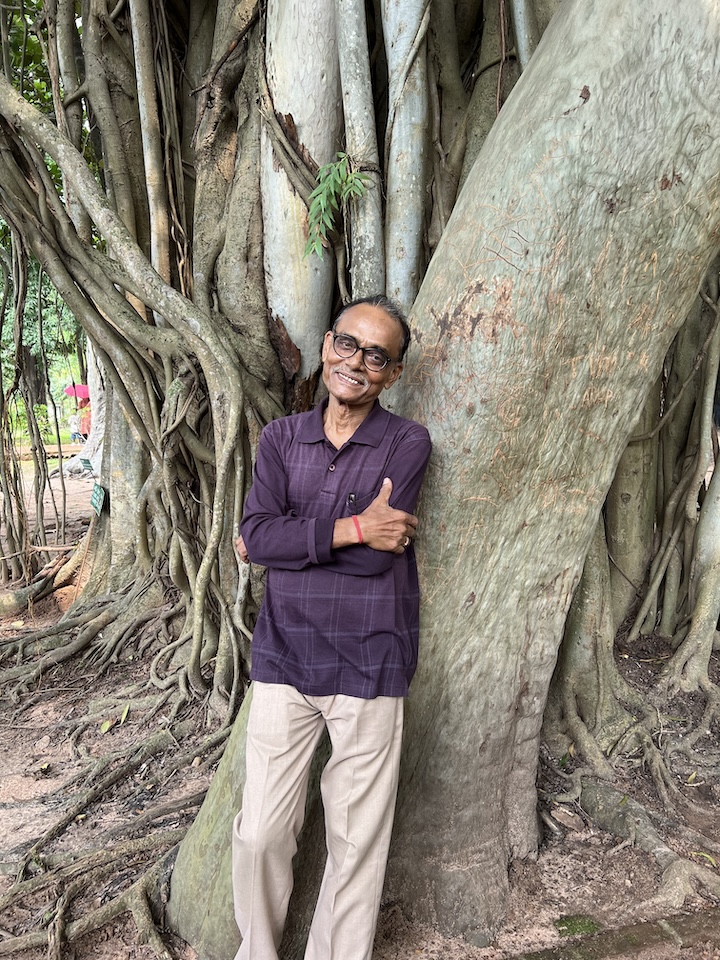
We learned all of this information from our guide, Bibhuti Das. Friend him on Facebook! To understand more, follow all of the links.
Every quilt maker knows that the secret to a successful quilt is contrast. Indians brings that concept into an incredibly rich physical reality.
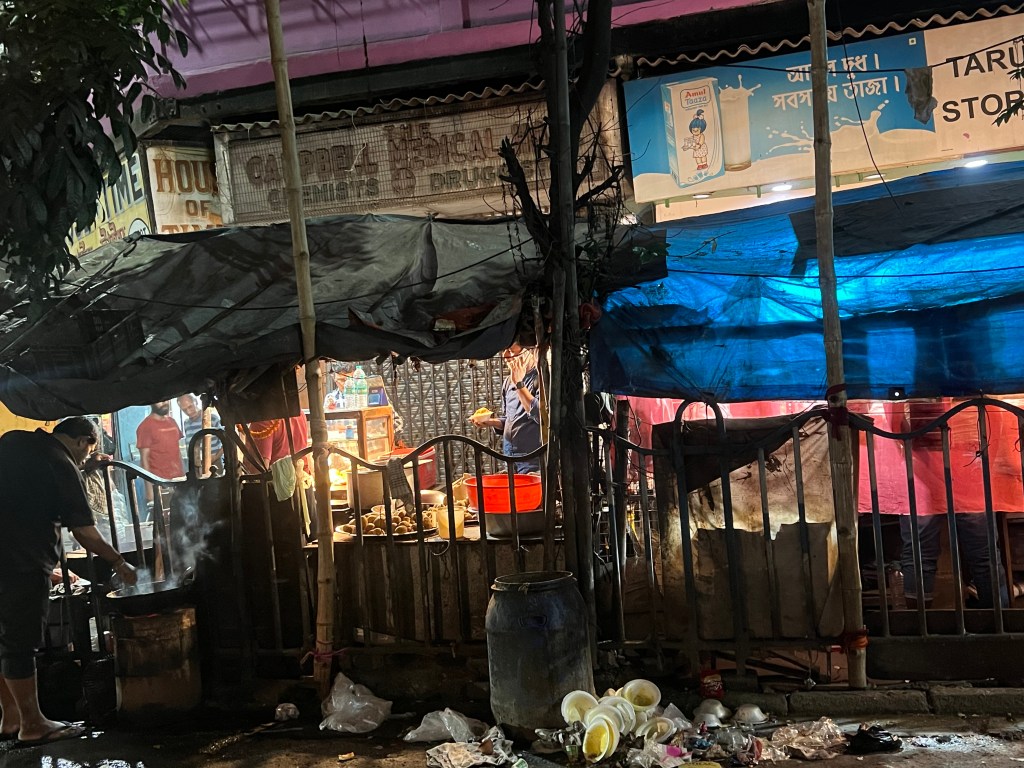
As a case in point, the two cities we have visited so far; Delhi appears modern and sophisticated, more like a Europe (not exactly, but…), while Kolkata feels like an old world bizarre from another time and place. A simple example is with the hotel breakfast buffet- one half will be European with fruit, yogurt, sweet breads and cereals and the other half is the best Indian buffet array of idlis, dosas, dals, and curries. And so it goes, everything we continue to see here is contrast upon contrast upon contrast, a complex patchwork that is taking its time coming together in my mind. Guess below which is which city???
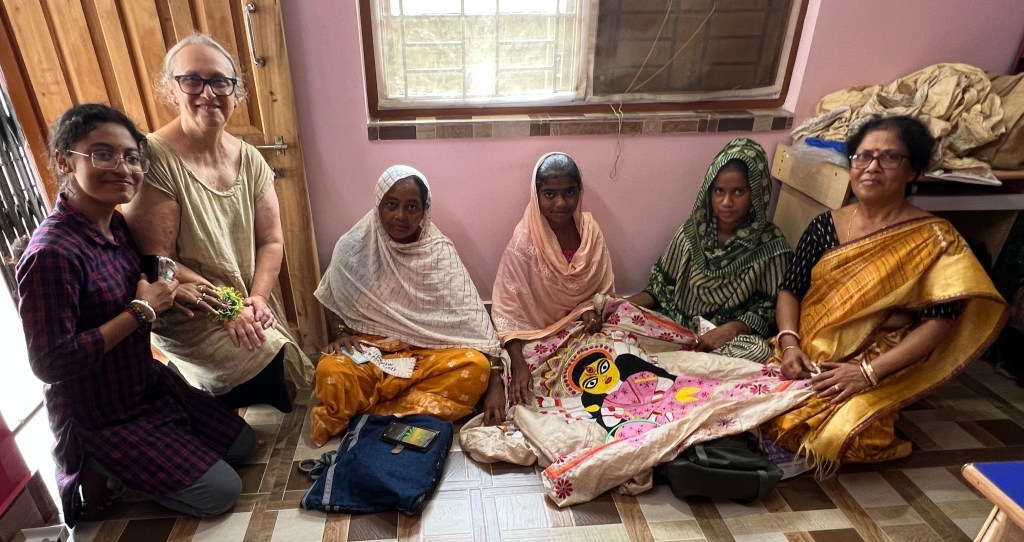
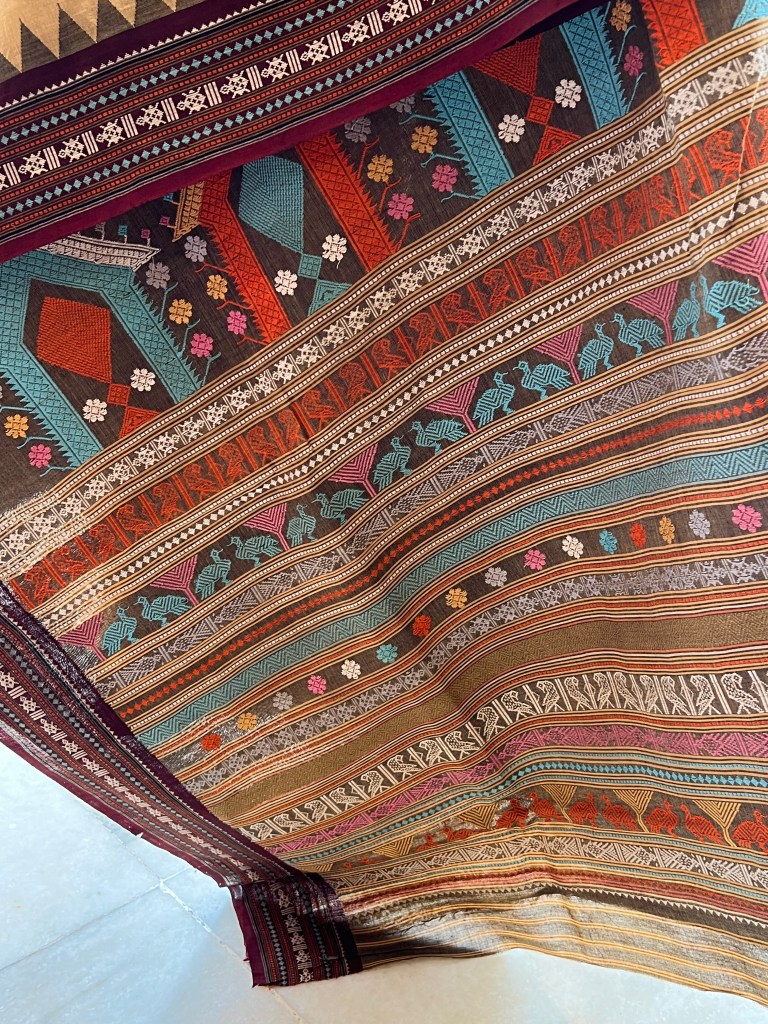
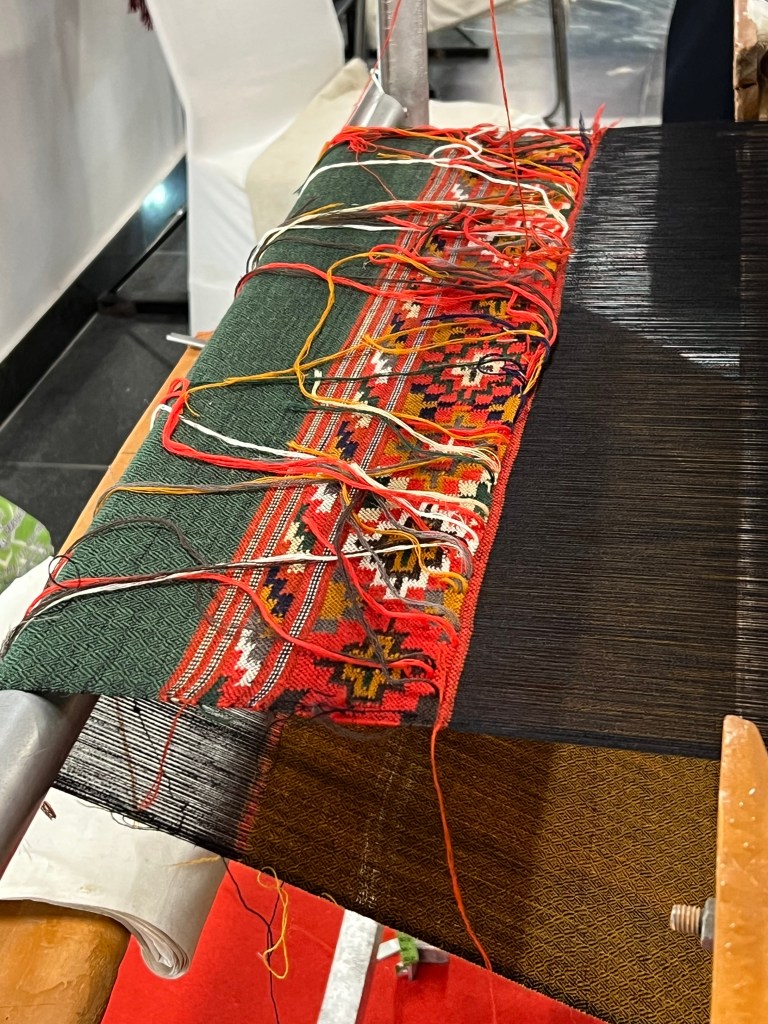
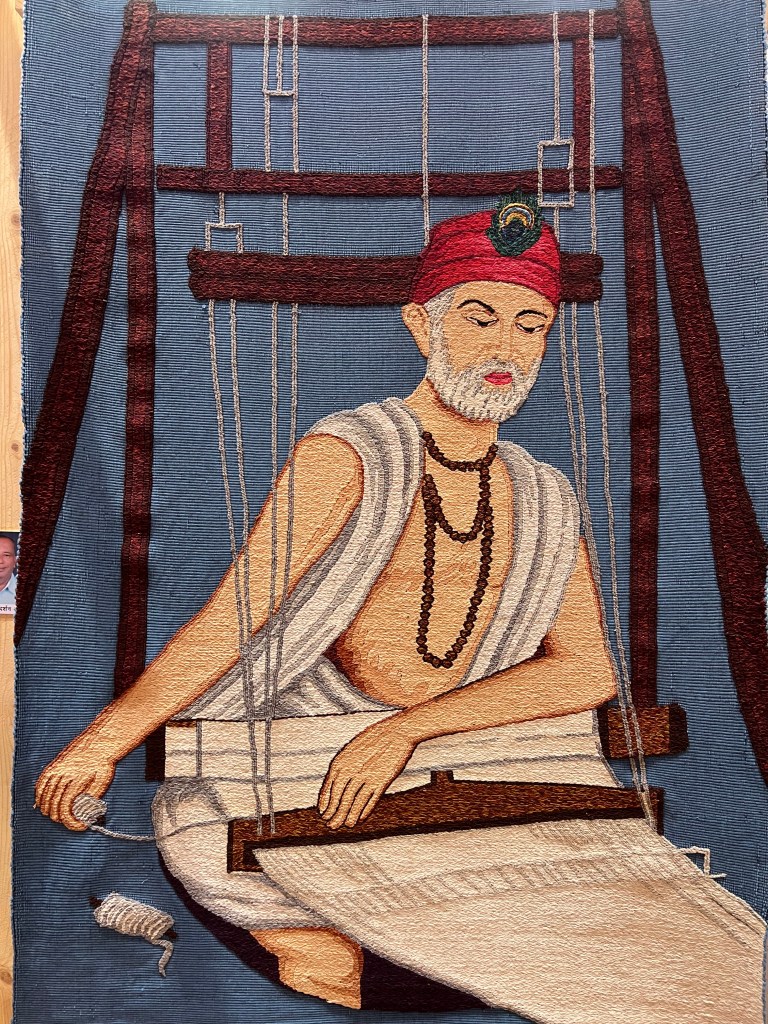
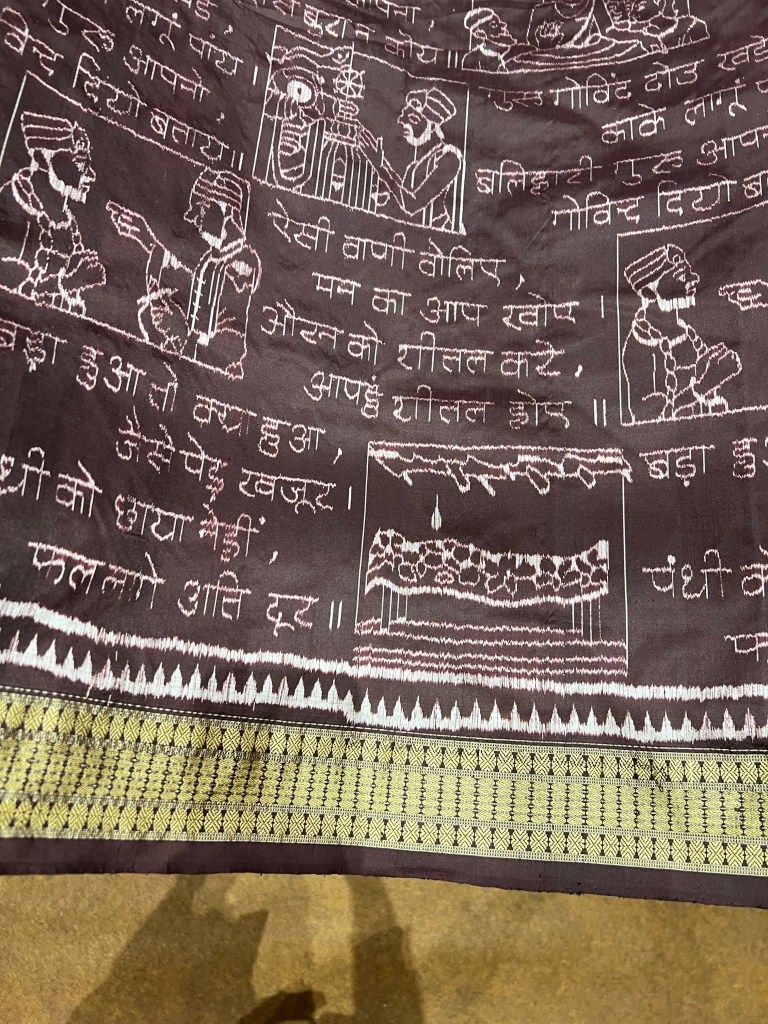
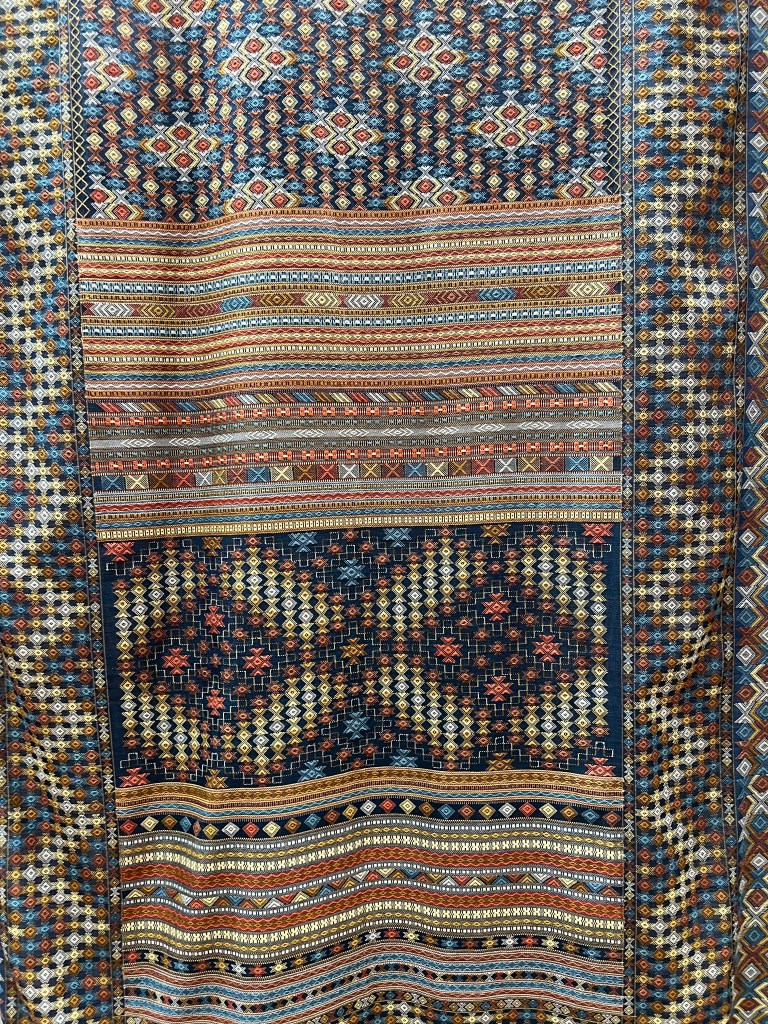
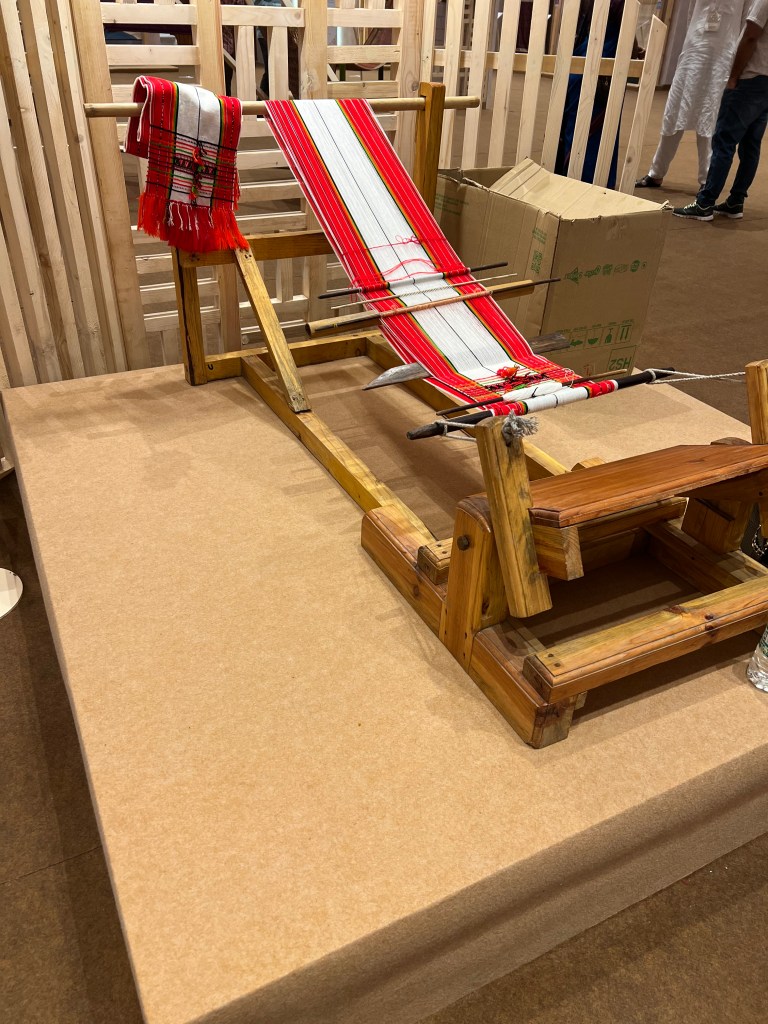
India is home to 95% of the world’s total handwoven fabric. Handloom weaving is the second largest employer in the country, agriculture being the first. All of this hand-work occurs across the country, most of it in the hinterlands. Yesterday, we were in Bolpur/Shantiniketan, an area about two hours north west of Kolkata by train. (The train station and the train ride are a whole story for another time!!) Our guide, Bibhuti Das, took us to six locations, here we have another example of complexity, this time with hand weaving. From one end, we met Bipod Lohar at his Mahua Natural Fashion Garments at his workshop where he creates farm-to-table, growing natural dyes for his handwoven fabrics stitched into Asian style clothing designs for an exclusive Japanese boutique designer, Gomi Taro. On the other, was the cottage industry of kantha embroidery run by Partha Nandi and her family. They supply hundreds of stitchers from all over the area. I was lucky enough to meet a mother and her daughters working in the supply house and discuss many production issues with Partha and her husband.
Stepping backwards in our trip, in Delhi, we attended National Handweavers Day, a convention of buyers, exhibitors, award-winning hand weavers from across the country and the world. We spent time with the foreign buyers group- one character after another an older Irish gentleman, a Japanese designer living in India, an Asian cook specializing in kimchi infused Indian foods and a man from Malaysia buying all types of hand made products. There were many, many wholesalers of cashmere and pashmina, one more magnificent than the next, made with no automation of any kind, making them very proud of their zero carbon footprint. (Which is quite funny because there is garbage and plastic waste everywhere,)
Another time I will discuss the culture, politics, religion and spirtuality, but just to say that everyone we meet talks freely about (T)Rump’s stupidity. They take his tariffs very personally!!
One final thought: We are 12 hours ahead in time, so as I write this and you read it, you have an extra 12 hours on me, to be and to do. ENJOY!!
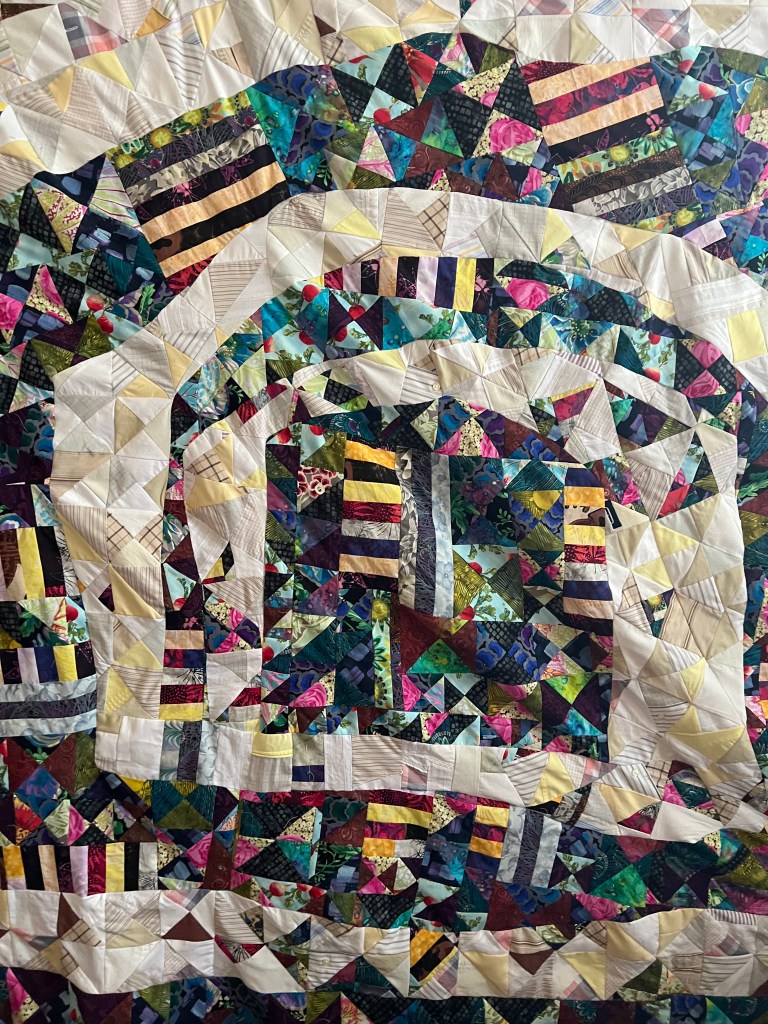
I decided to take a break from working on my next one-person exhibition and make a random art quilt. I pieced some of my old quilting fabric favorites into multiple triangle- pieced sections. For contrast, I added triangle sections from light colored men’s shirts. To stitch in the spirit of Indian technique of Kantha and/or the Japanese technique of Sashiko, both of which I admire, I quilted more than 400 meters of dmc pearl cotton onto a backing of leftover pieces of kantha quilts purchased from ETSY.
I love many things about the quilt, one of which is my stitching over someone’s from India. in the process, I understood the relationship. Tomorrow, Steve and I leave for a two week tour of Handweaving in India. Stay tuned to follow our travels!
Hi Ms. Louise,
Good evening, let me introduce myself. I am K.C.Shakdwipee, worked over 39 years in Indian handloom textiles sector, held positions as Joint Development commissioner (handlooms), General manager, chief marketing manager Ministry of Textiles, Government of India.
2. I am currently in pittsburgh till 20th May in connection with my daughters commencement ceremony at CMU.
3. I was impressed by your dedication in the area of patchwork quilt and saw the ongoing exhibition at history centre.
4. India too has a good history in patchwork – Kantha in West Bengal ( meaning story telling in native language).
5. It will be interesting to meet you at your convenience to see your studio.
Let me know if its okay with you and advise suitable time.
Regards
K.C.Shakdwipee
K C and his daughter came to the loft with the idea that I might be someone whose story could inspire the artisans he represents. He invited us to India to meet them. Steve and I liked his idea and agreed we would try to arrange a trip to India, maybe in the fall.
When K C returned to India, he invited us to come in August for National Handloom Day.
“Regarding our discussion to plan a visit to India, one important event by our Handloom Department, Ministry of Textiles is on 7th August 2025- National handloom day. It will be presided by Honourable President of India, with senior leaders, Bureaucrats, renowned designers, leading exporters, National level handloom Award winners among others will be in attendance. You can plan a visit during that time if possible, I will arrange all the passes for the events for you.”
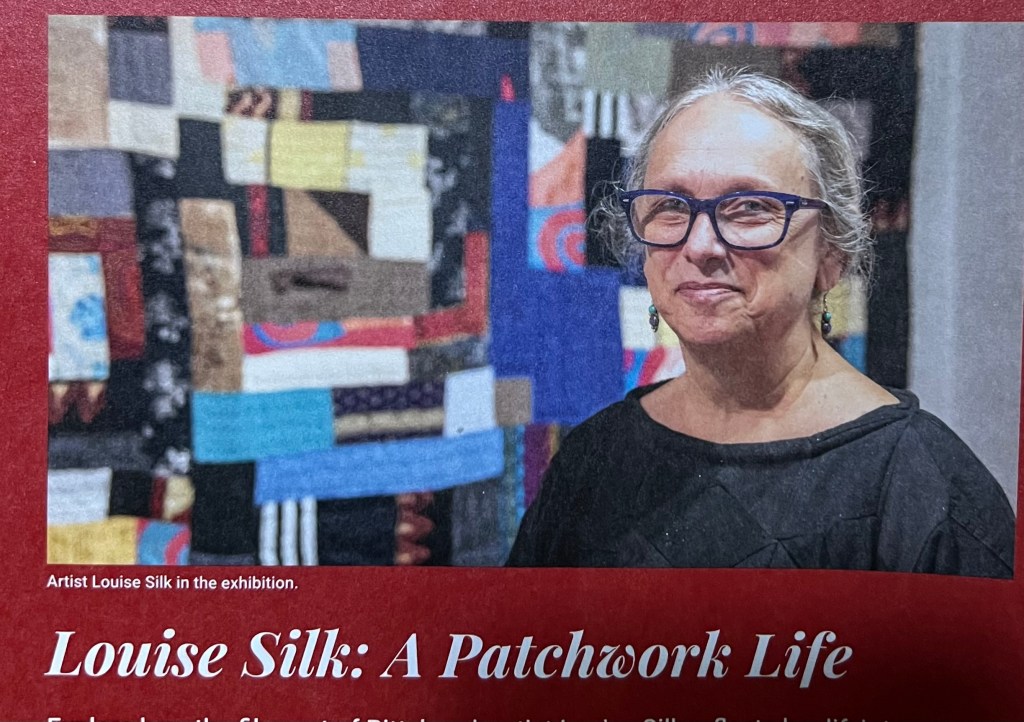
Louise Silk: A Patchwork Life that was on view at the Heinz History Center in Pittsburgh, Pennsylvania from September 1, 2024, through May 26, 2025. The exhibit follows the timeline of my quilting experiences through my connections to community, art, feminism, and renewal. The story, while personal and specific, became the repository for larger concepts of folk history, cultural reflection, and personal identification.
I made a video summary of the exhibit that you can watch here or by scanning this QR code:
It started with a rejection. AAP had a call for Pittsburgh related art. I made what I thought was the perfect piece: A Steele Town Angel. It was denied entry into the exhibit. The rejection fueled me- a common problem for Quilters is not being accepted in the art world and so the solution was to enter the quilt into a competition where it would be appreciated. I applied to Quilt National, the premier exhibition for quilt makers and was accepted. I felt vindicated.
Quilt National requires all quilts to be in their possession months before the installation so they can be photographed for their catalog. The day before the photo session, I received a call from the director informing me that my quilt had never arrived at the Dairy Barn. I was devastated by the idea of getting into Quilt National but not being in the exhibit. She agreed to use my slide from the entry for the photograph and hope that the quilt would appear.
I contacted the post office and found that they had lost track of my quilt in Cleveland. The Diary Barn is in Athens, Ohio. They sent me an insurance check, making me fear it would never be recovered and so I did what any overachieving quilt maker in this situation would do; I asked the director if I could make it again. She agreed and I began the arduous task of re-creation.
Some months later, when I was in the final quilting stage of creating the second quilt, I heard from the director again: the original quilt had been delivered to the Dairy Barn.
And with that, allow me to present Steel Town Angel I and Steel Town Angel II.
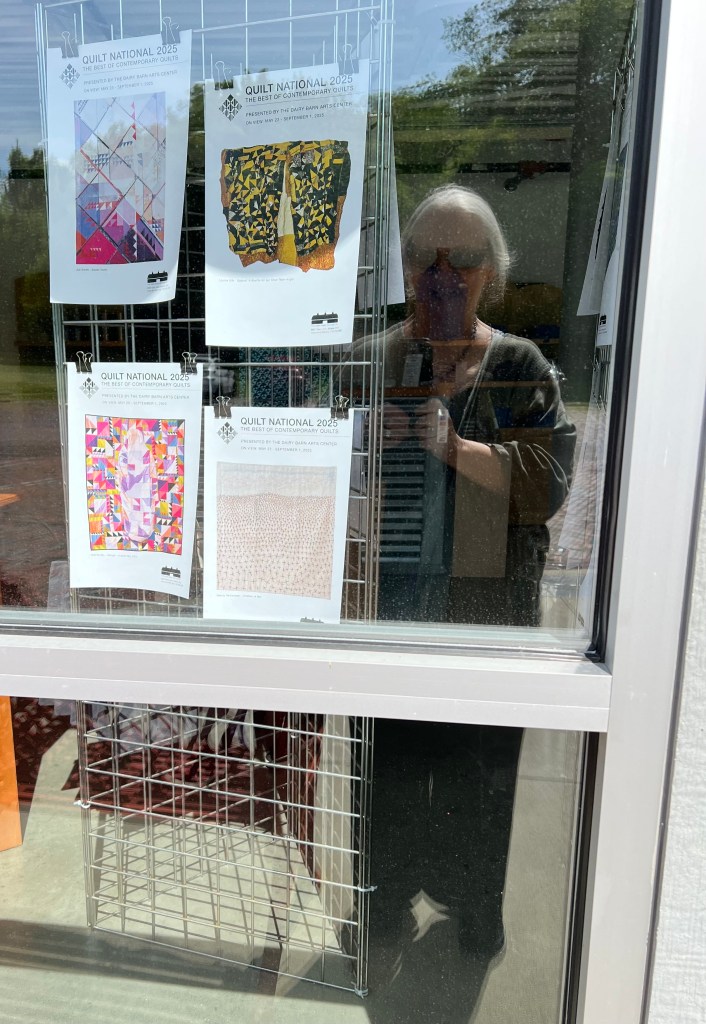
If you are interested in the pulse of contemporary quilt making, there is no better place than The Dairy Barn in Athens, Ohio, the host of the preeminent Quilt National. I am honored to be included among these ahead of the curve Artists in this year’s exhibition:
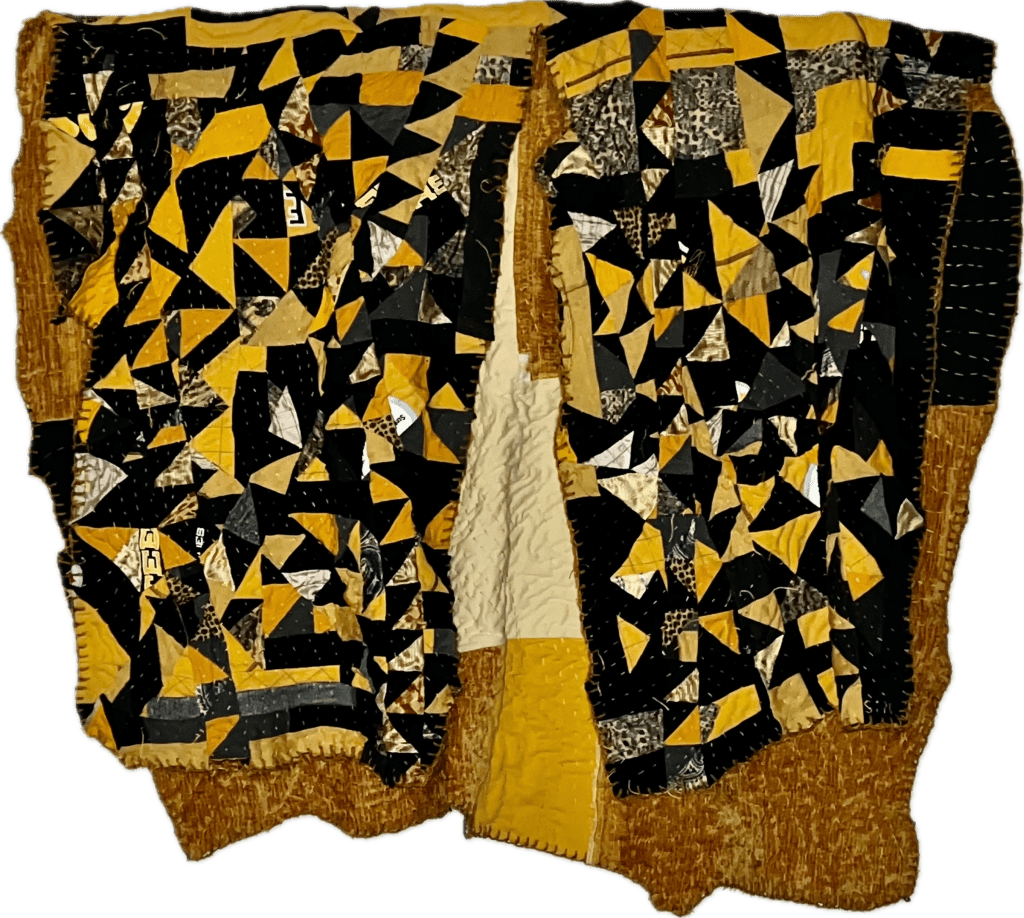
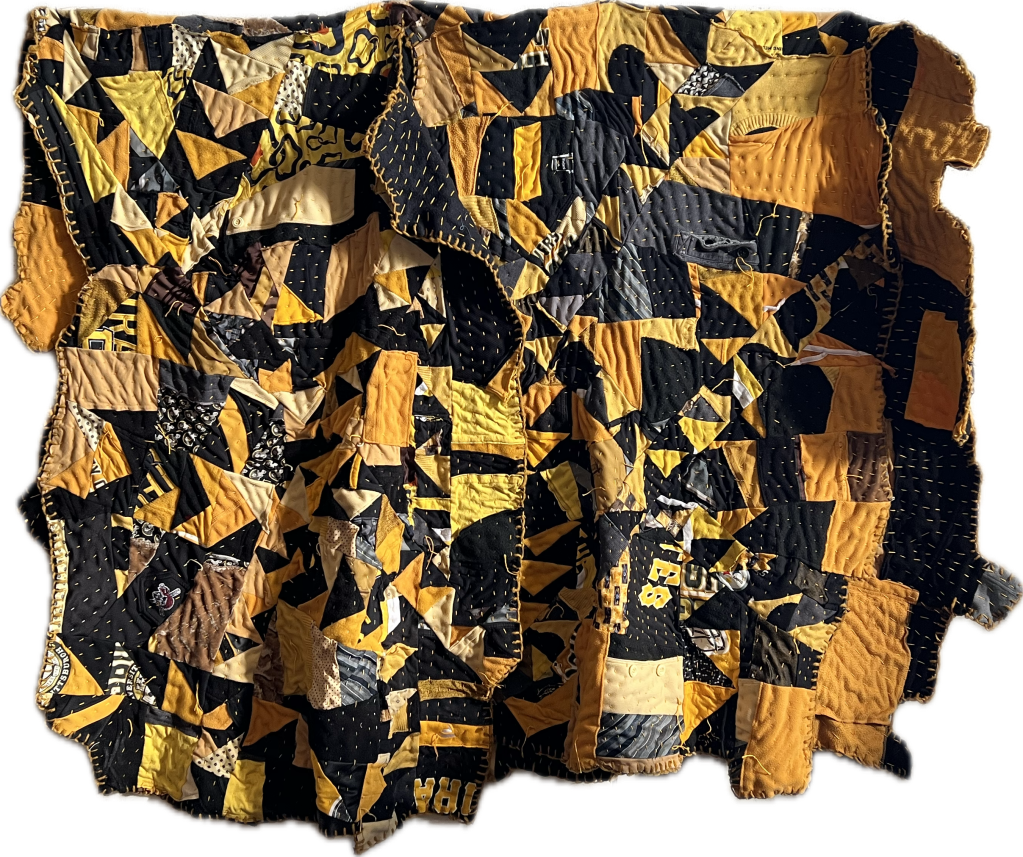
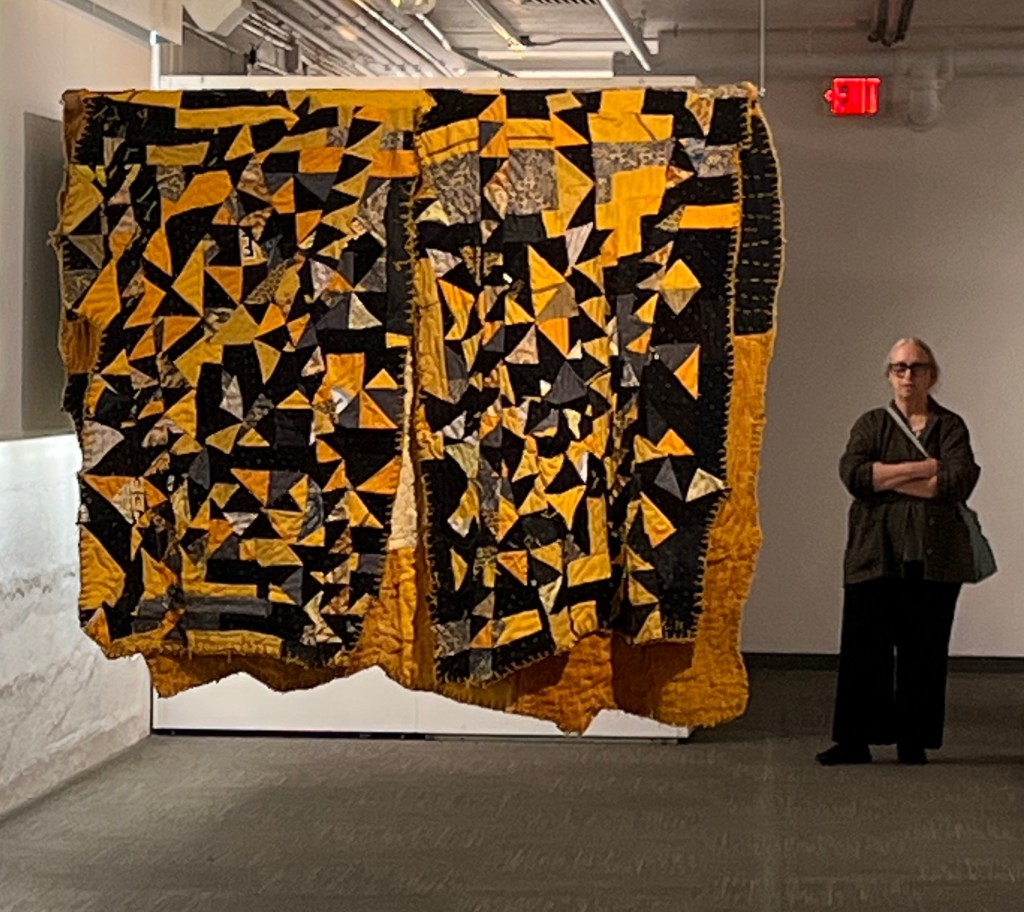
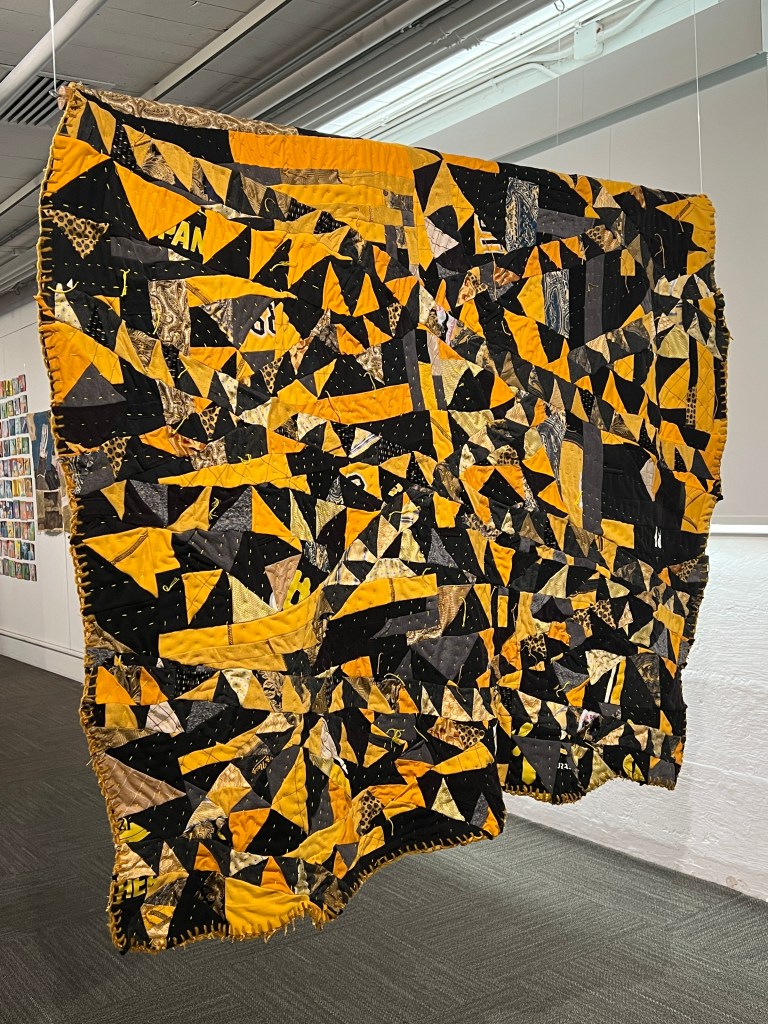
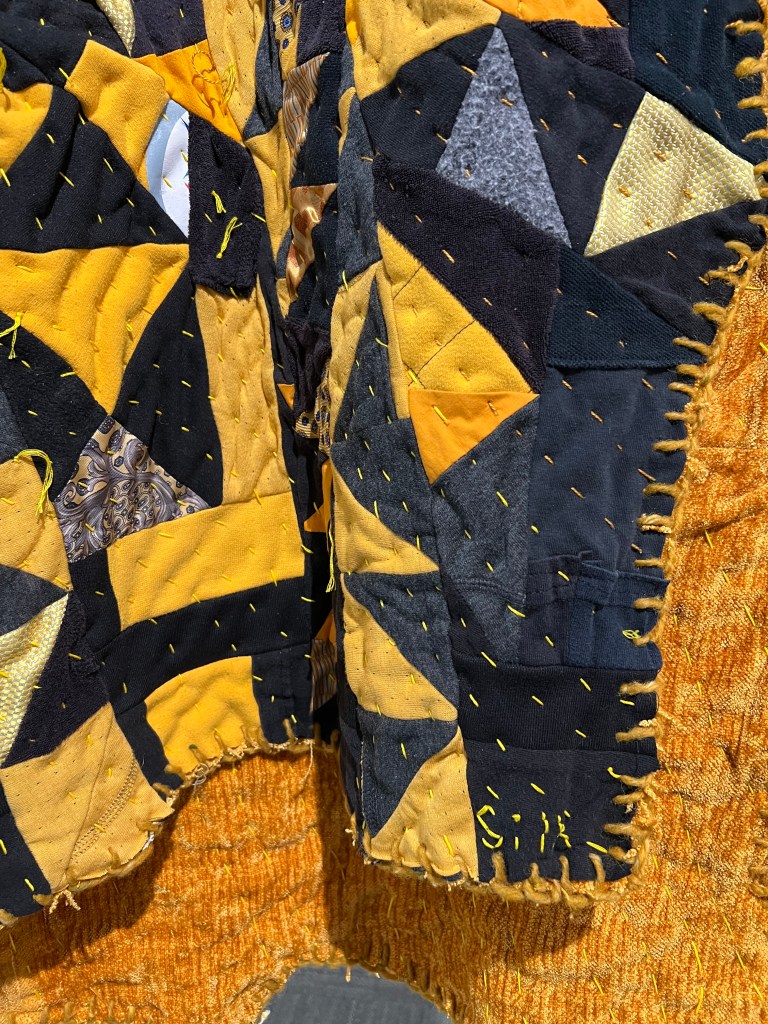
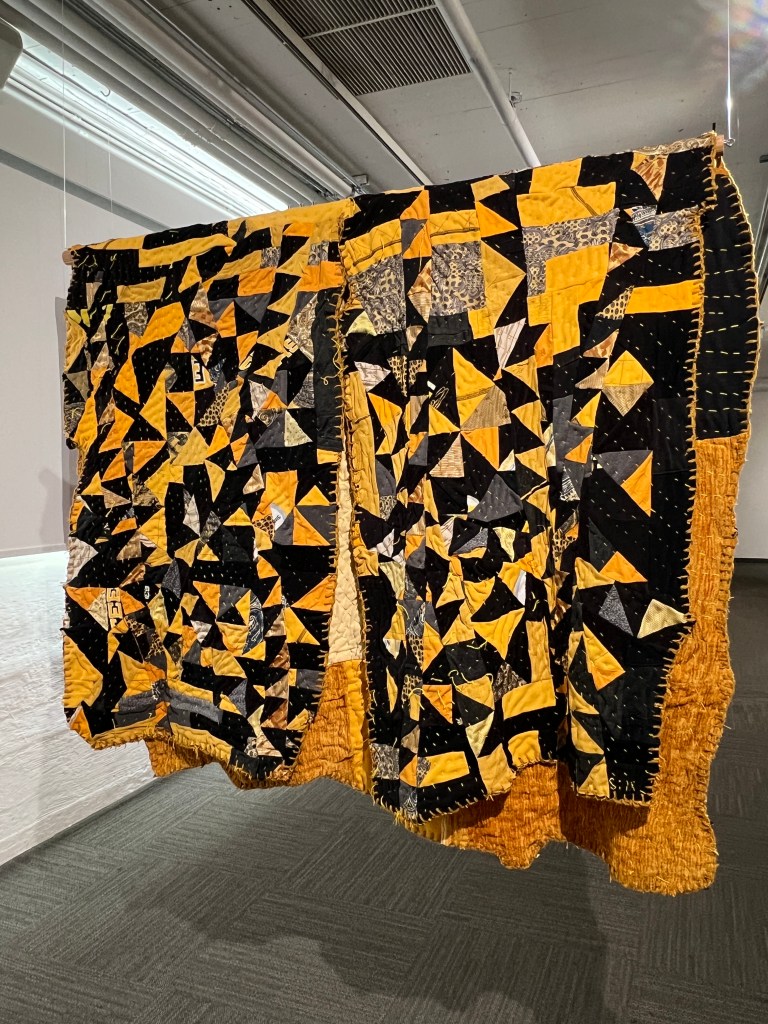
QN25: Gabriel: A Mantle for our Steel Town Angel; 55W X 56L X 6D; Machine Pieced, Hand Quilted, and Buttonhole Stitch Embroidery; Sweaters, Tee-Shirts, Ties, and Blanket.
This work is composed of ordinary re-used materials. The archangel, Gabriel, presides over water, making them the perfect angel to protect a town of three rivers. The mantle, like a quilt, serves the practical function of warmth and protection from the elements. In this case, it also serves as the symbolic divine representation.
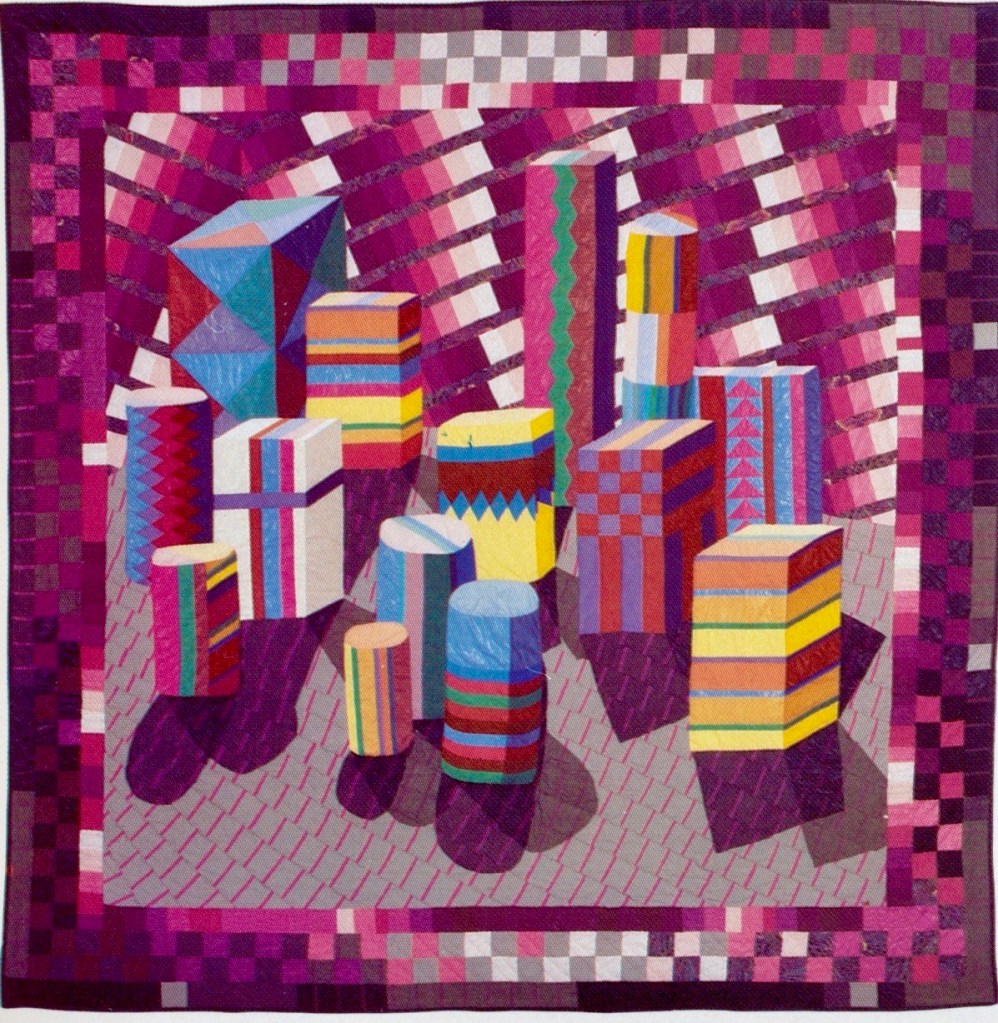
The History Center has put me in a retrospective mood to observe the scope of my work in the Quilt National context. Here are the pieces from my first acceptance in 1987 and this year’s acceptance:
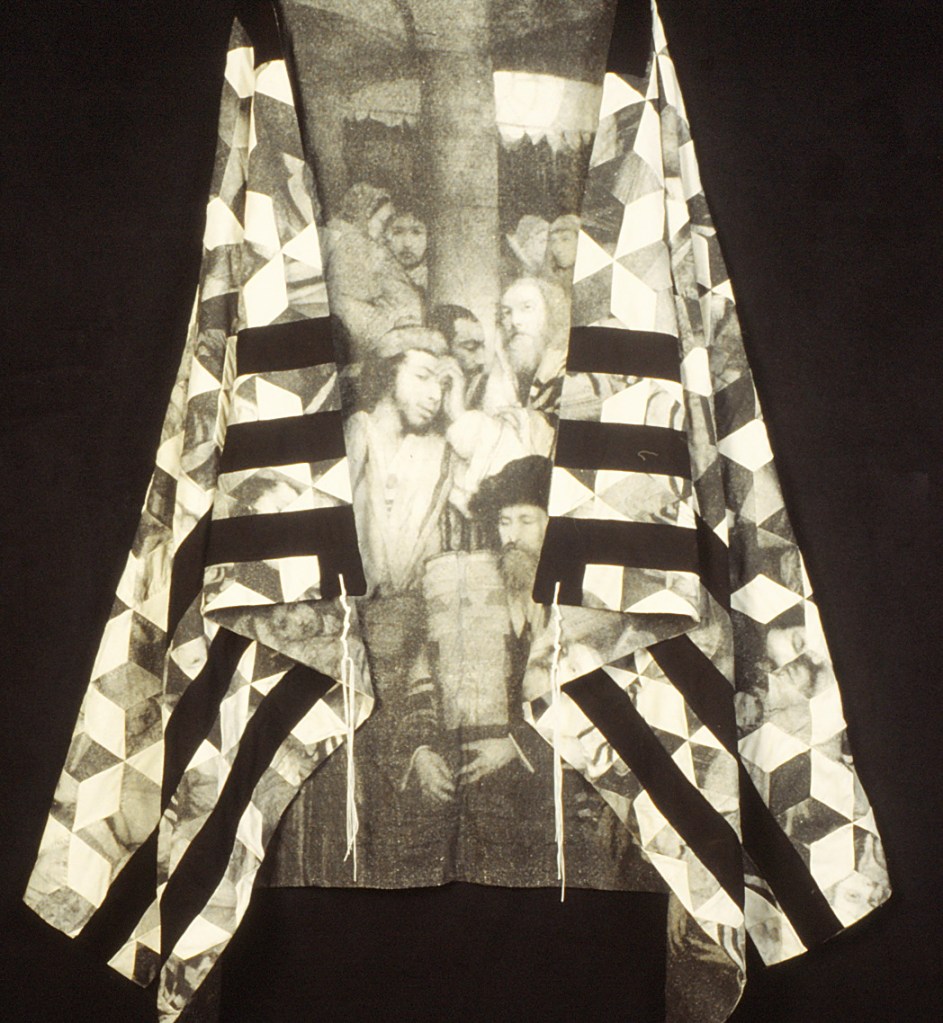
Two pieces accepted in partnership with Leslie Golomb Hartman in 1997 & 2001:
35″H X40″W; SilkScreened and Embroidered Commercial Cotton; Hand Quilted
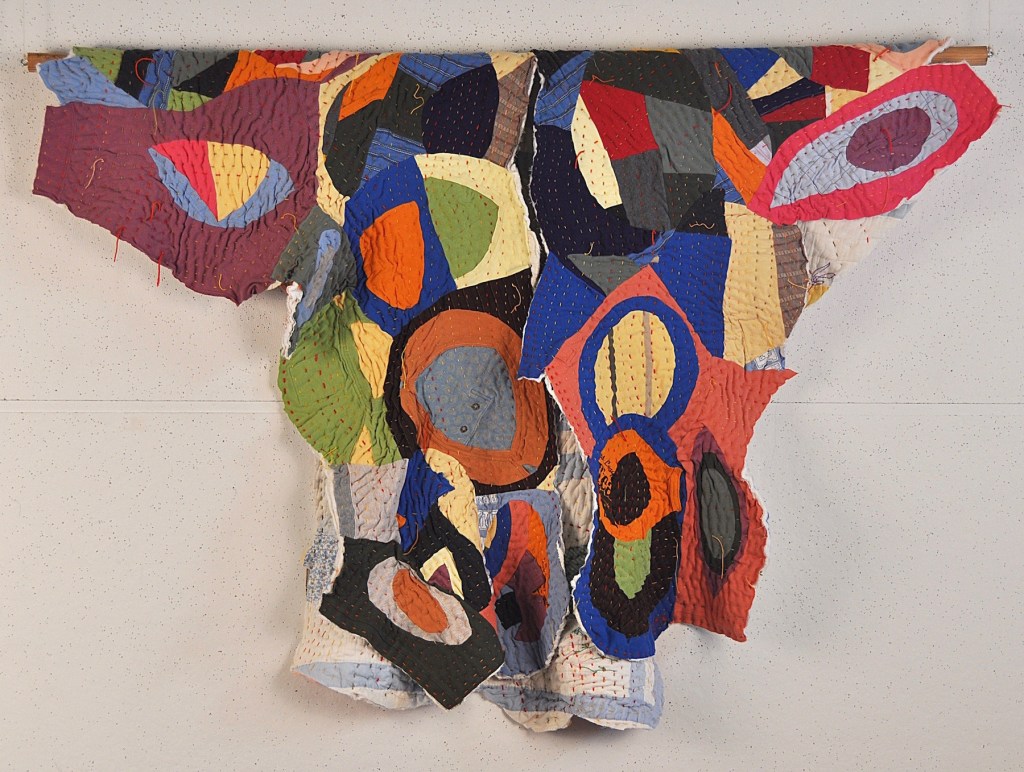
And two made of tee-shirt remnants, Tree of Life in 2011 and Rasiel’s Mantle in 2017:


















 BubbeWisdom