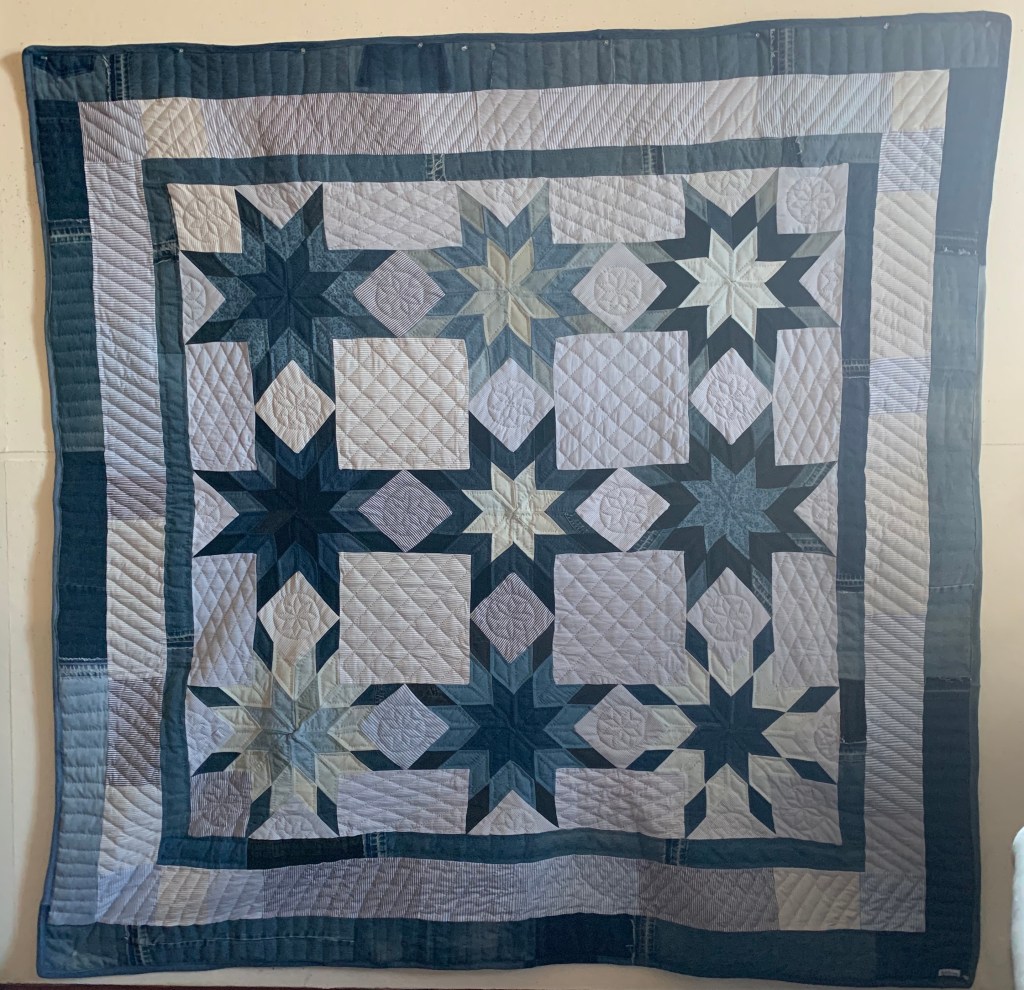
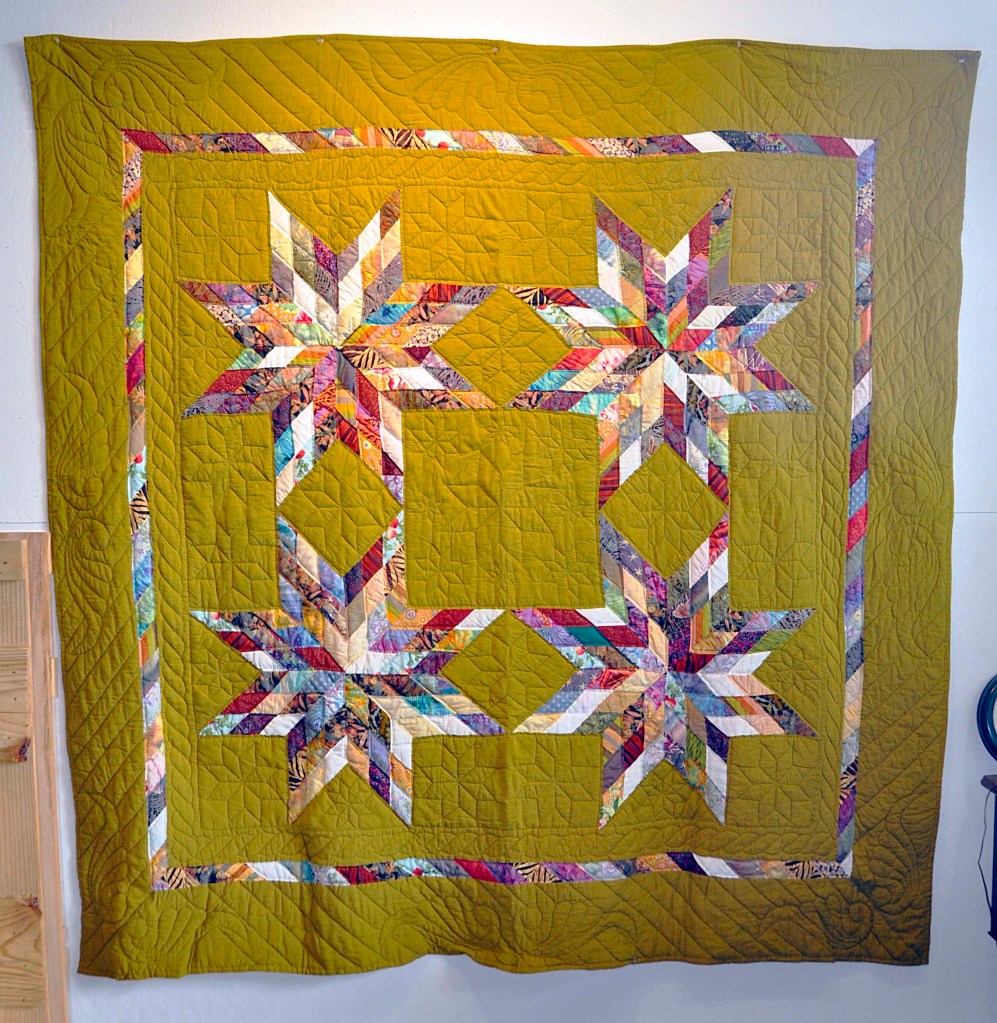
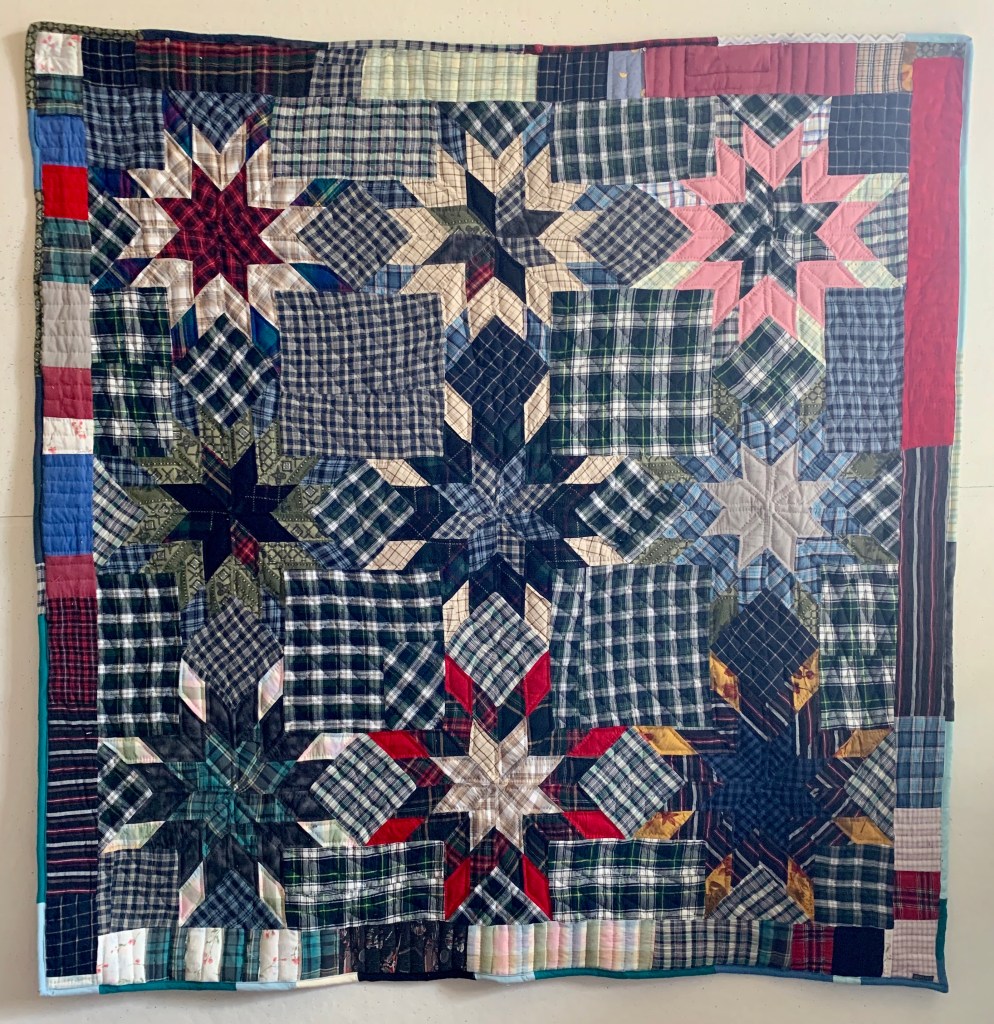
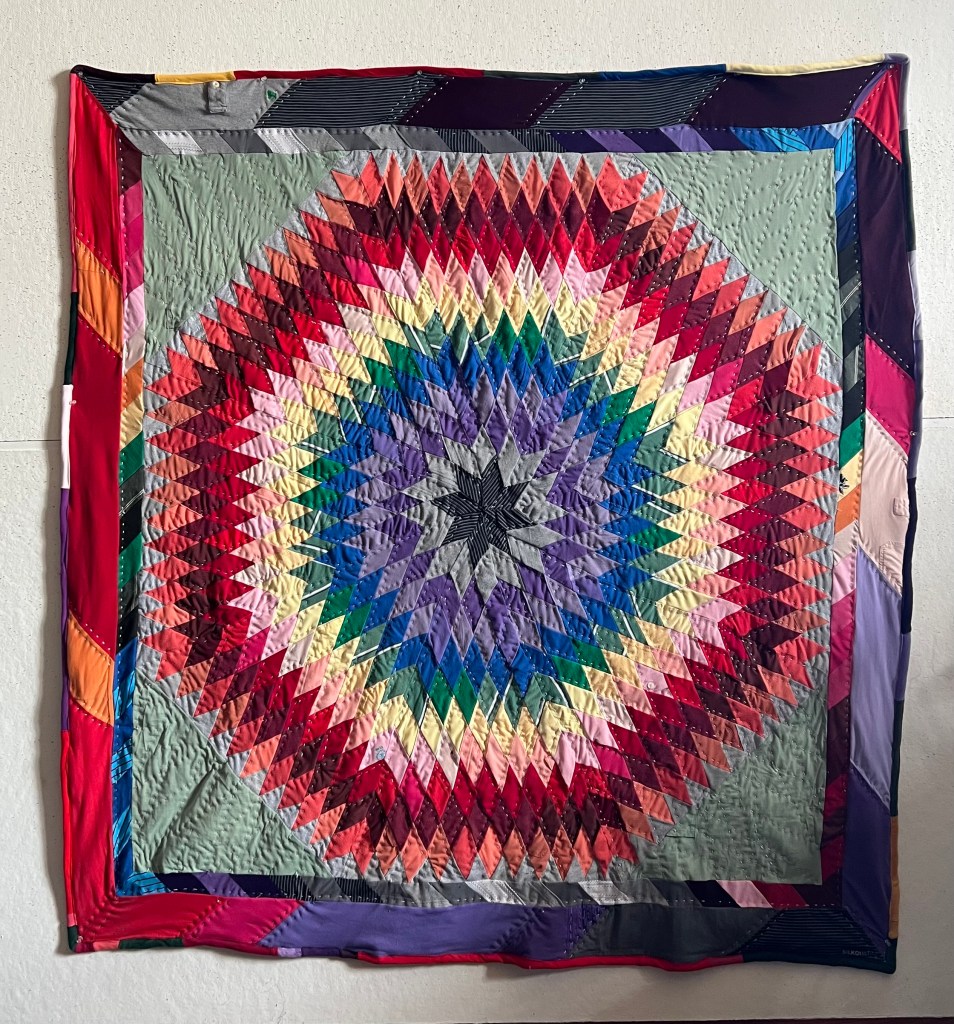
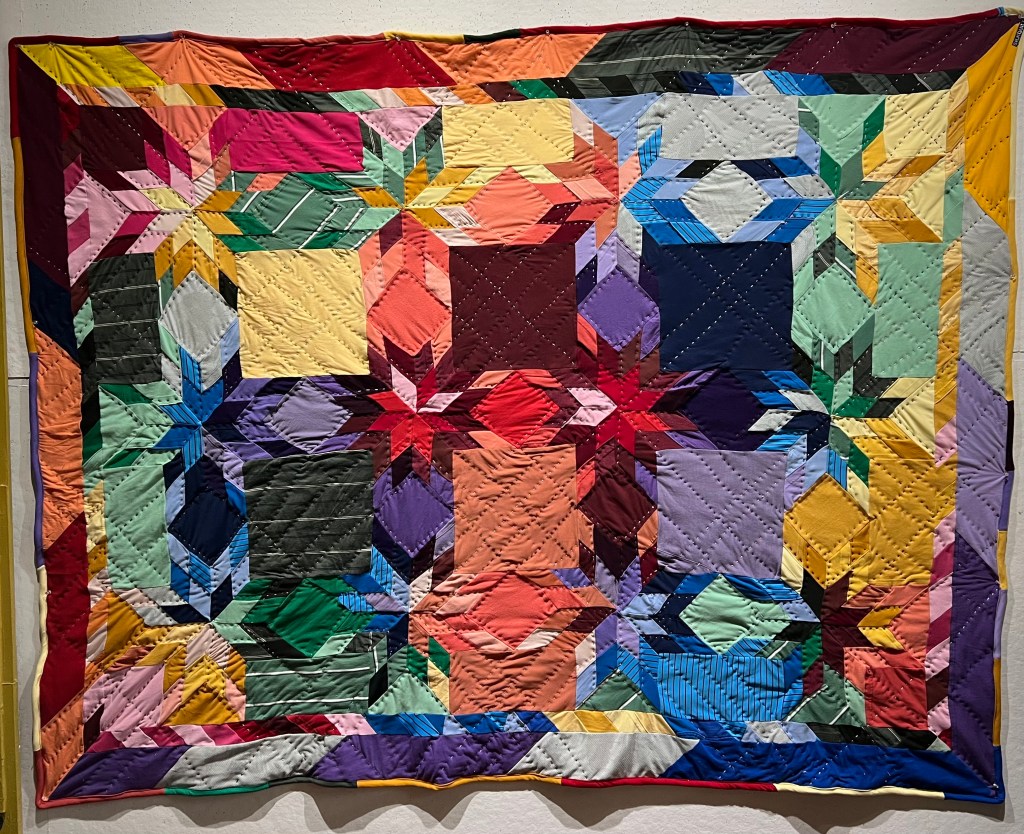
Relatives were here for the holidays and the quilt our niece choose to snuggle under was a SILKDENIM version of the classic 8-pointed stars made from men’s shirts and denim:
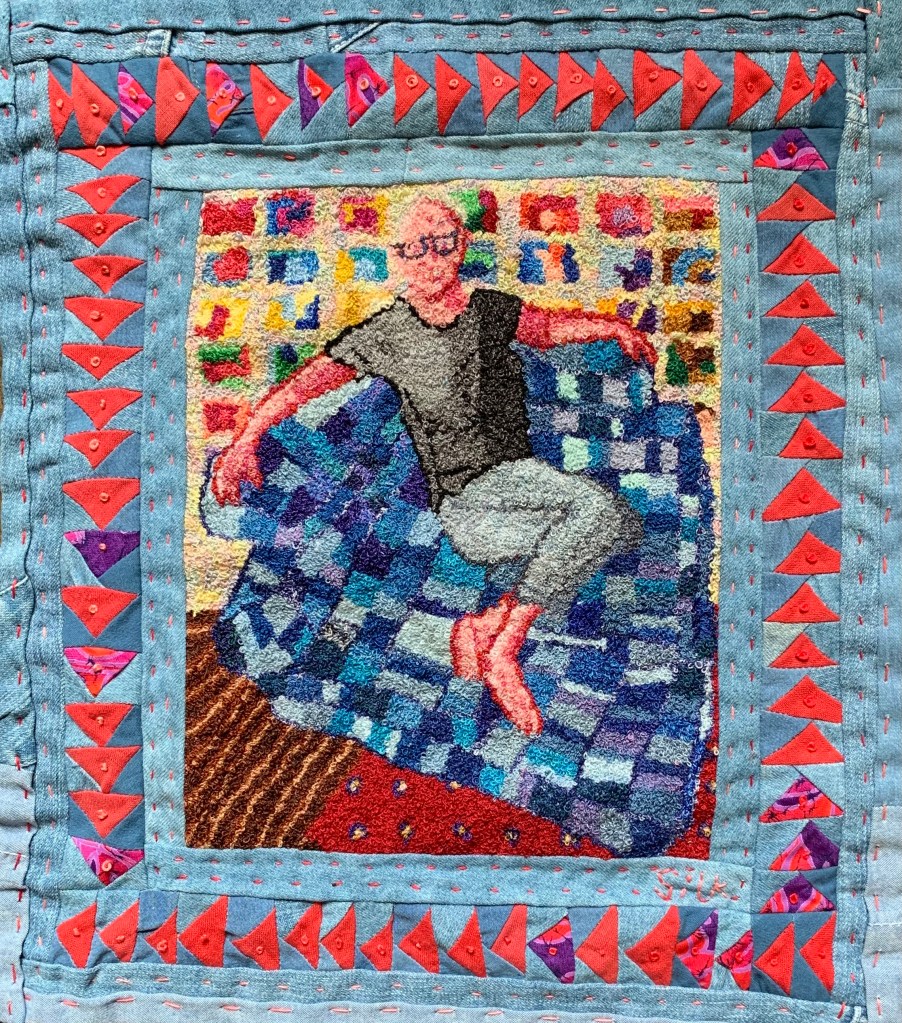
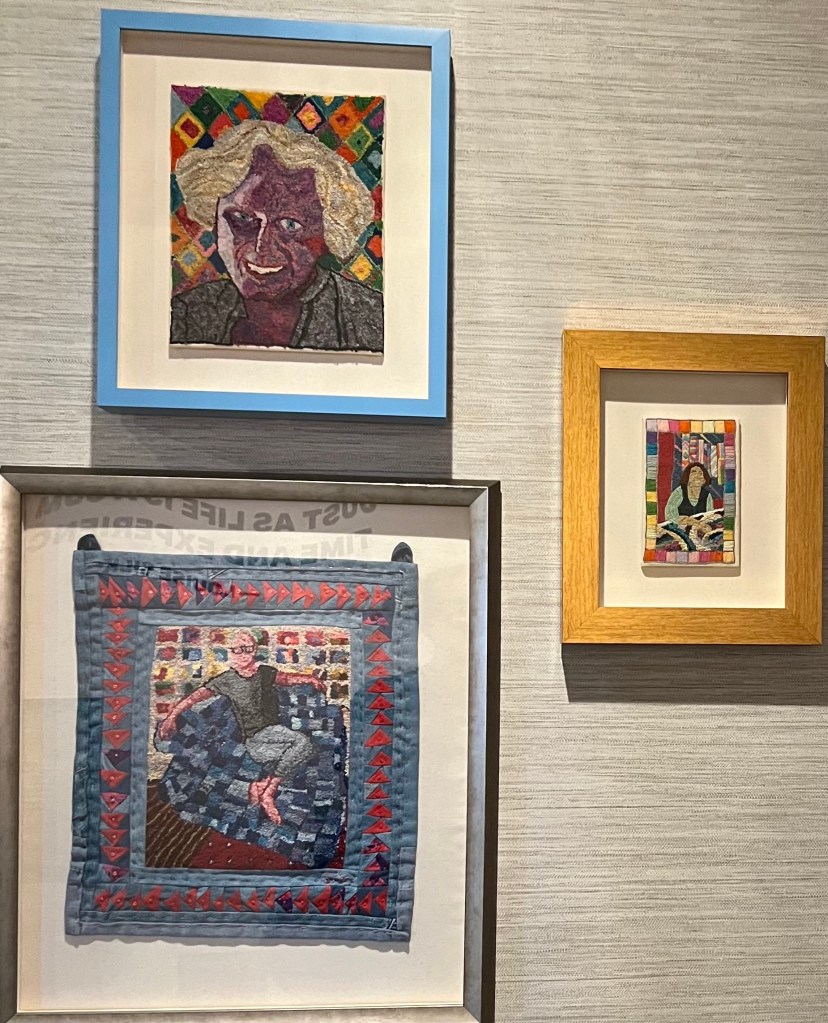
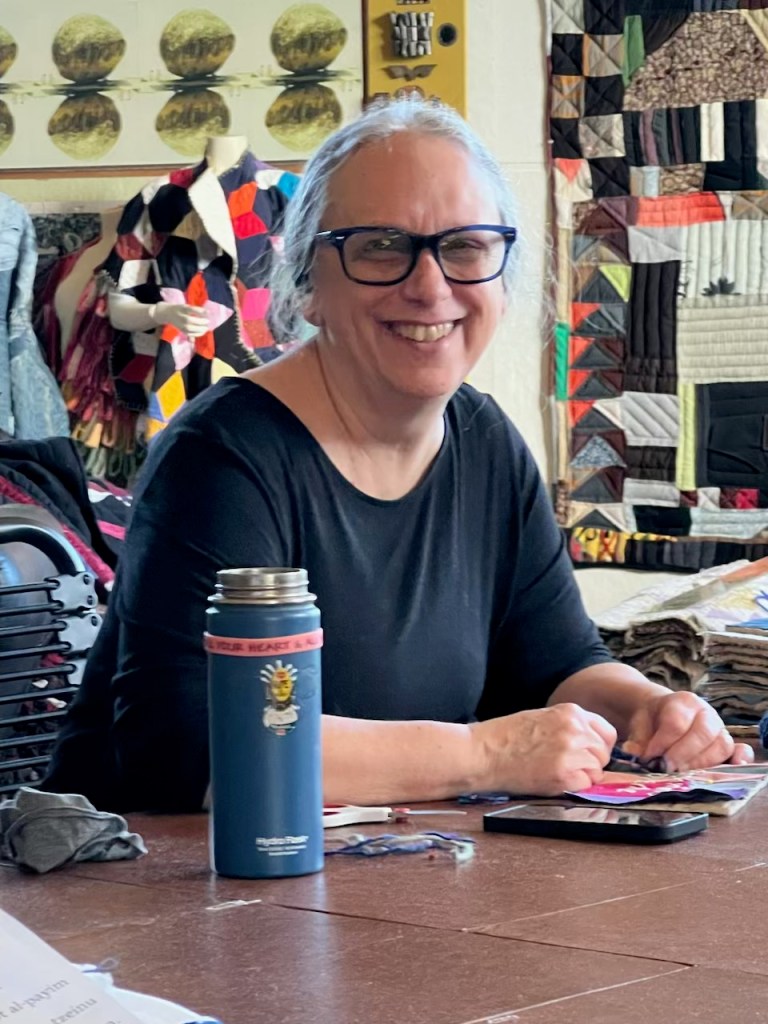
Like most people, I find it challenging to select and then view portraits of myself. In the past, whenever it is possible, I use one of my fiber portraits:
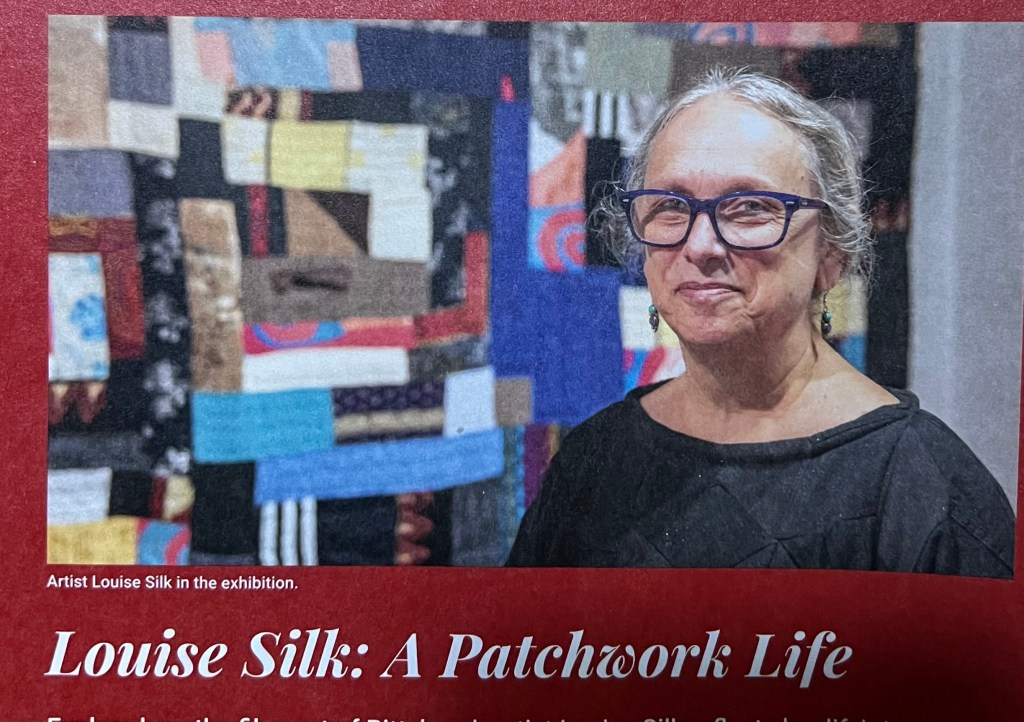
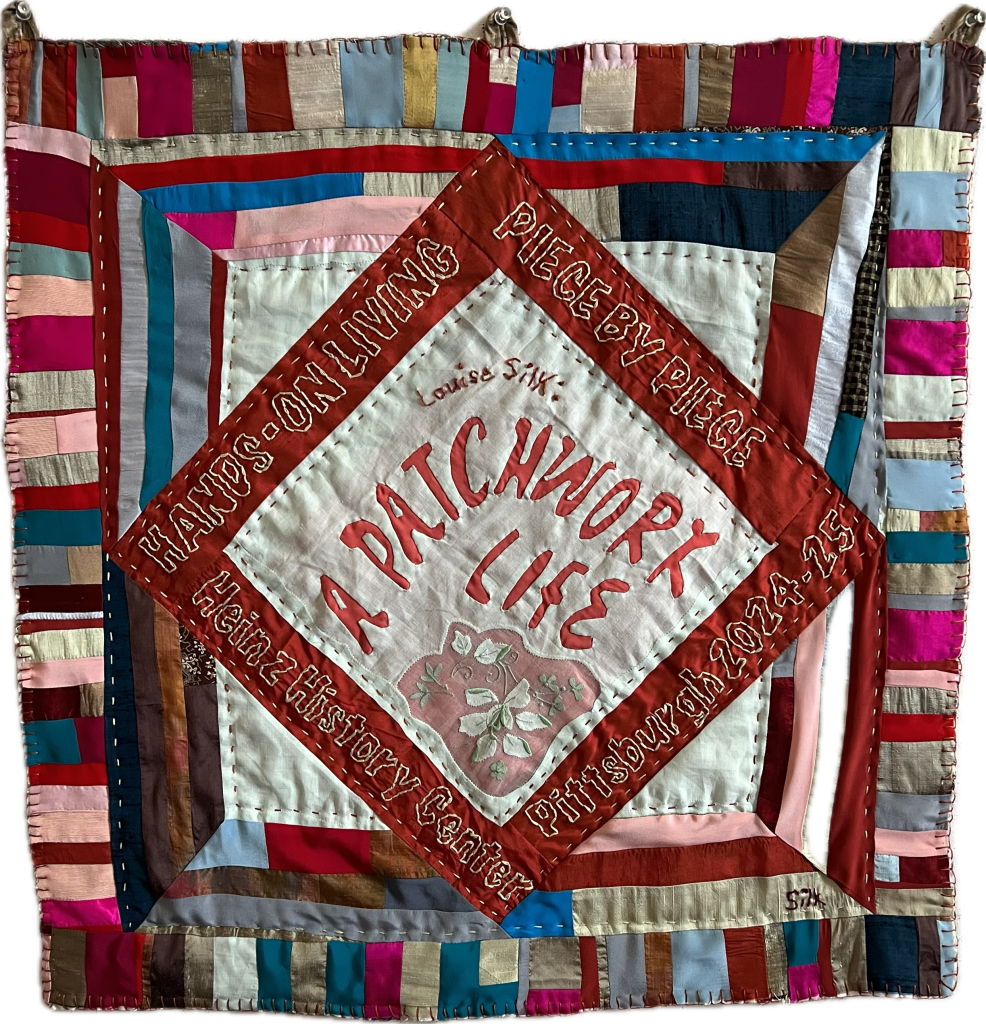
With the exhibition Louise Silk: A Patchwork Life, there have been lots of difficult decisions to be made in that regard. There was a portrait of me in the History’s recent newsletter:
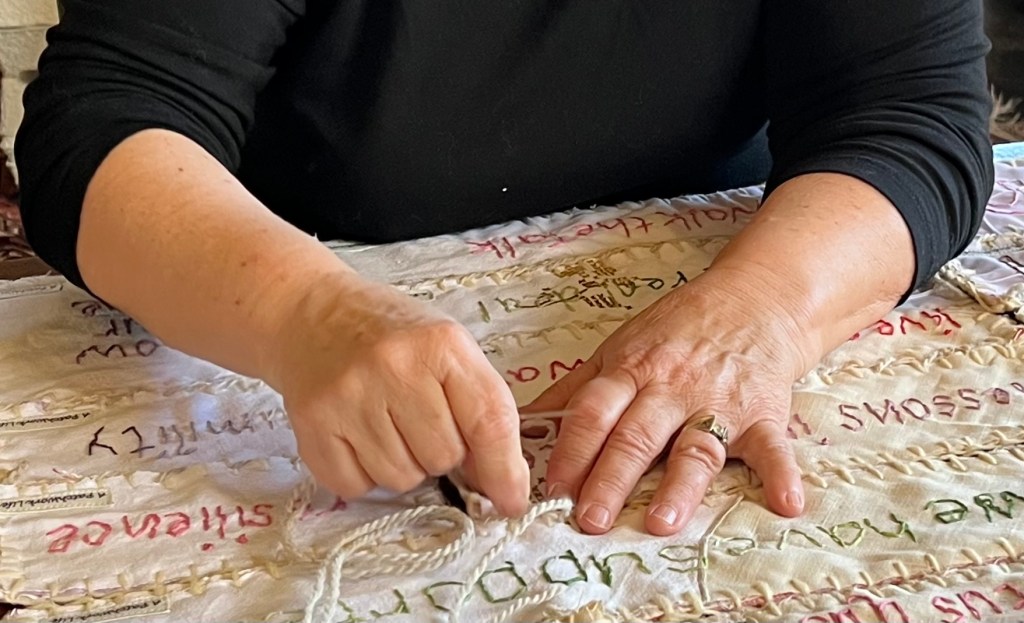
I guess it’s okay, but when I’m ninety, like Sheila Hicks, I will have earned the right to not have to use my face but instead the real star of the show, my hands!
Gut Yontif is our programming series celebrating the Jewish Holidays. The next installment of our Gut Yontif! series is Dec. 28 with a fiery Chanukah celebration from Rosabel Rosalind, then on Thursday, Feb. 13 with an intimate Tu B’shvat seder from Lydia Rosenberg, and finally on Wednesday, March 12 with an all-embracing Purim party from Olivia Devorah Tucker.
There is unrelenting tragedy in the air. We feel it deeply and personally, wondering about any hope of a healing resolution. It’s easy to project these sad negative feelings onto others.
In Jason Shulman’s Kabbalistic Healing we work with those projections and judgments by riding the wave of transference. The technique does not avoid the projections, instead we acknowledge and become fully conscious of how they exist within us.
Riding the wave, we let the projections become vivid and give them full attention until, inevitably, something shifts. We discover new information in the transference that helps us widen our view of these tragedies. Honoring the transference brings forth a sacred portal of deeper knowing and subsequent actions that support loving possibilities for healing.
From Vol. 5, No. 40, October 6, 2024, the RAUH JEWISH HISTORY PROGRAM & ARCHIVES NEWSLETTER:
Vidui, the spiritual center of the Yom Kippur liturgy, is a confessional prayer at the boundary of personal and communal responsibility. It is an alphabetical inventory of misdeeds, recited in the first-person plural: We have sinned. We have transgressed. We have stolen. It describes a brokenhearted world, desperate for atonement. These words have become so essential to Jewish spiritual life that they are the basis for last rites.
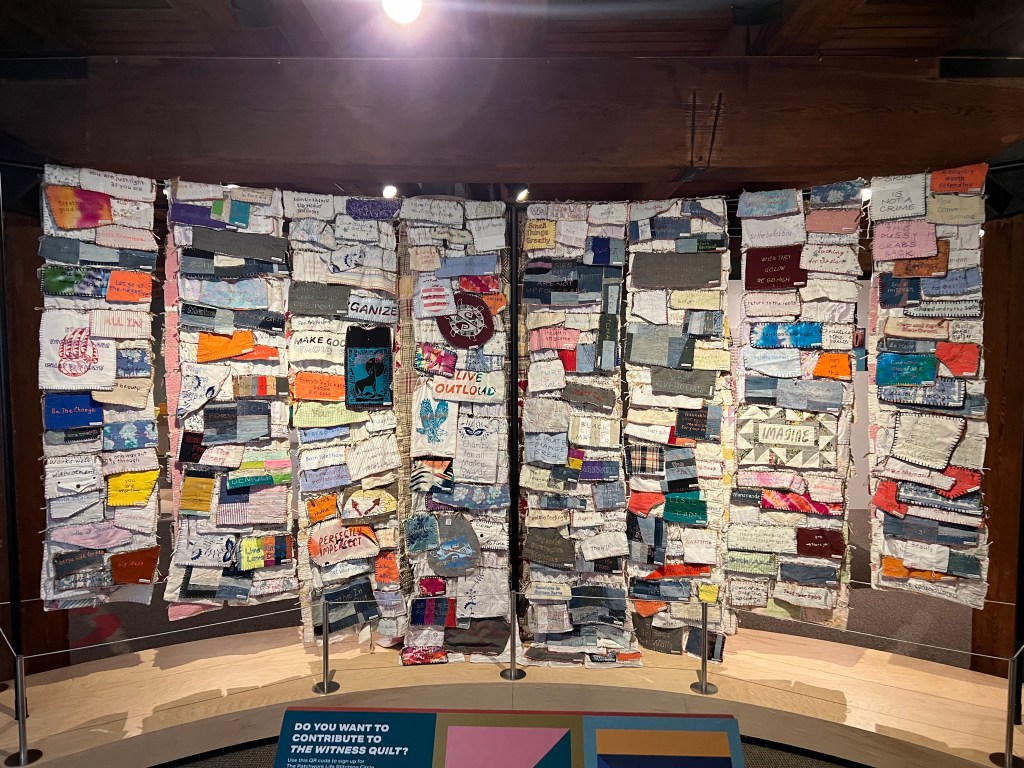
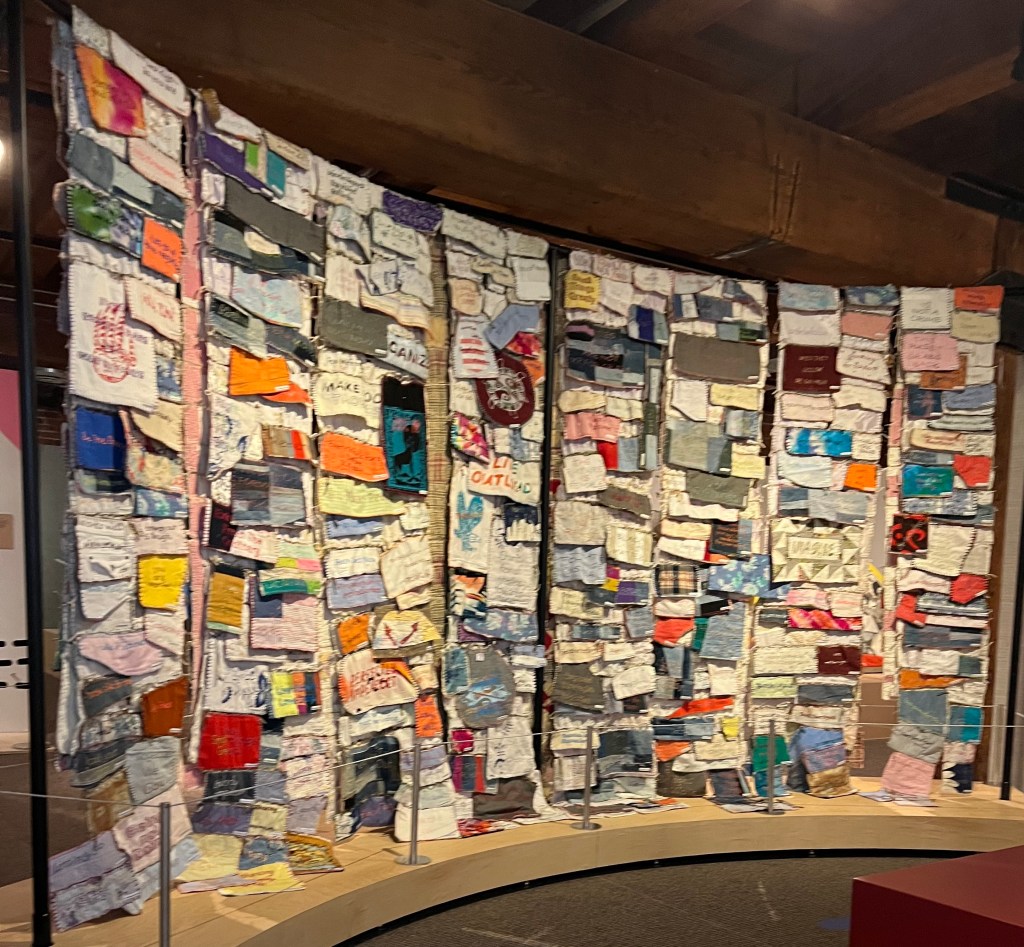
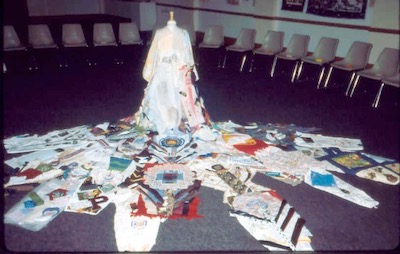
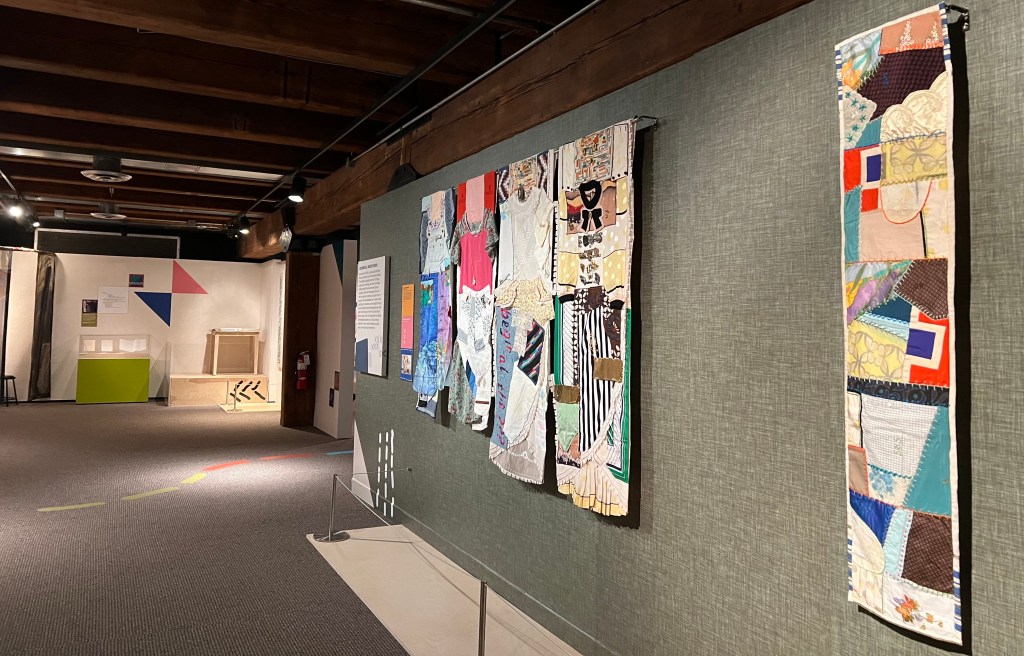
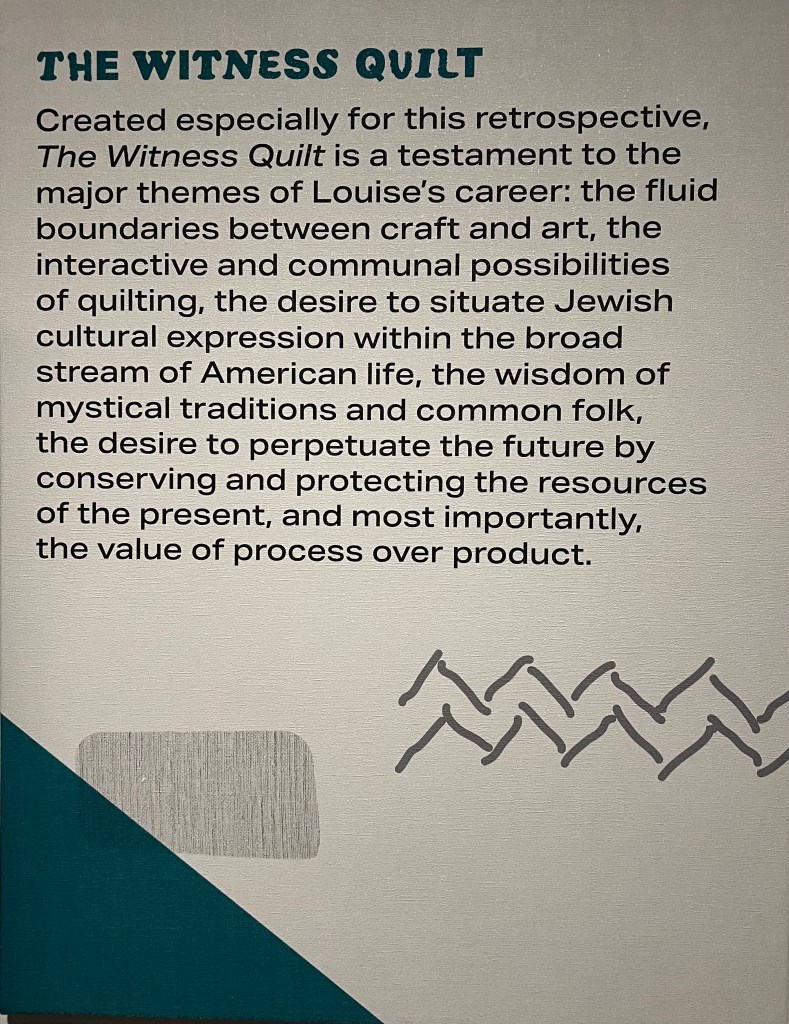
Louise Silk’s new work “The Witness Quilt” subverts this experience. It borrows its form from a kittel, the all-white garment traditionally worn during Yom Kippur. The all-white underlayer of the Witness Quilt is embroidered with a “positive vidui” created by Rabbi Avi Weiss: We have love. We have blessed. We have grown. This version is not intended to replace the traditional vidui but rather to supplement it. If confessing misdeeds is a way to acknowledge failings, then confessing good deeds is a way of setting a path forward.
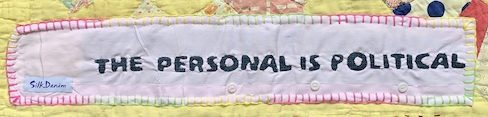
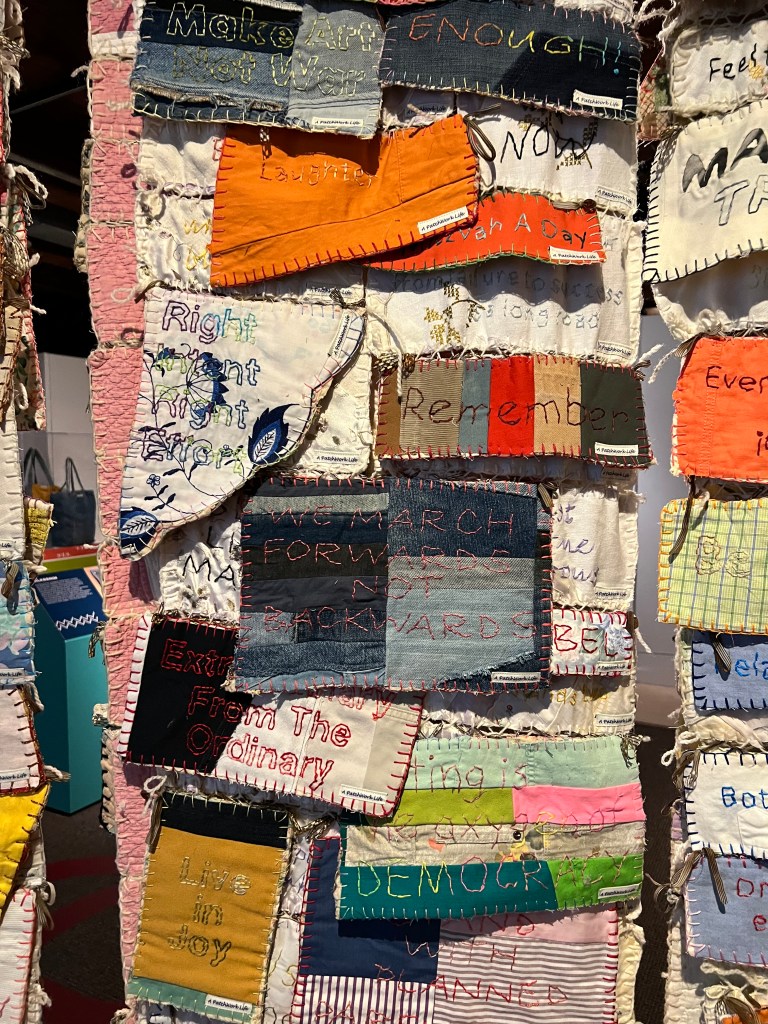
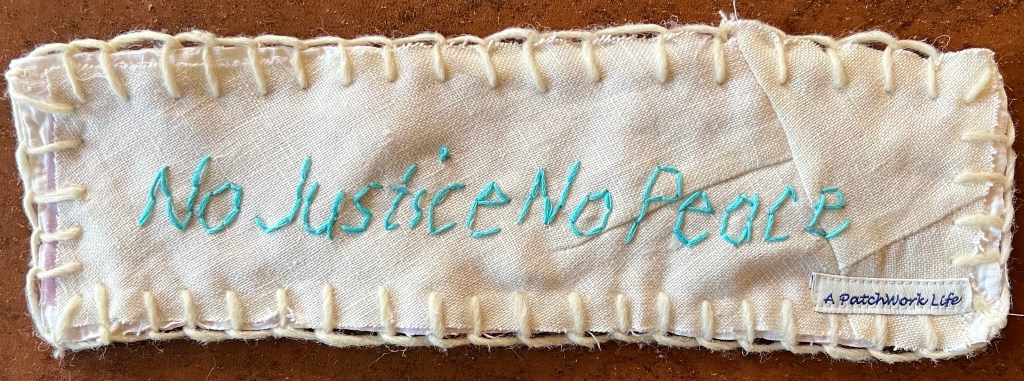
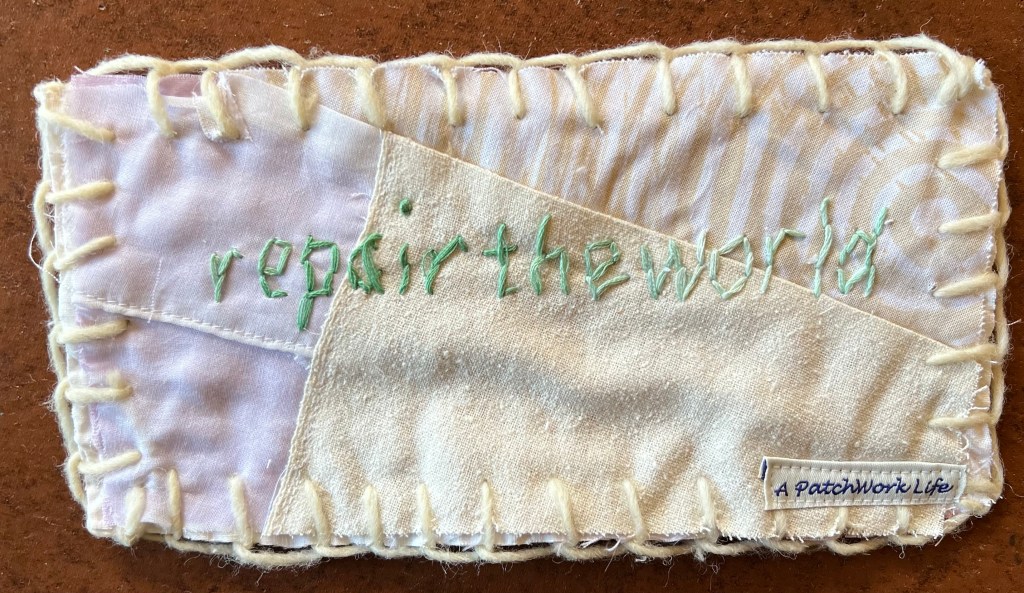
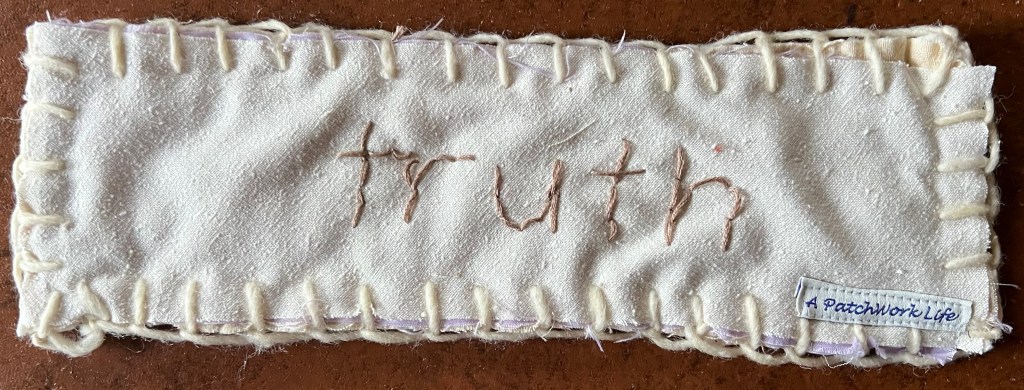
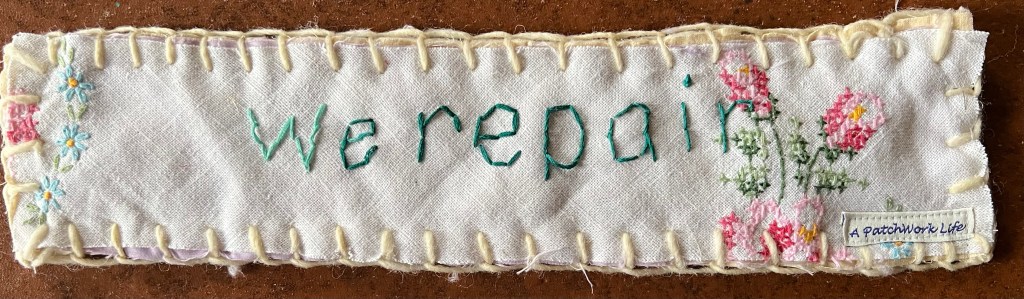
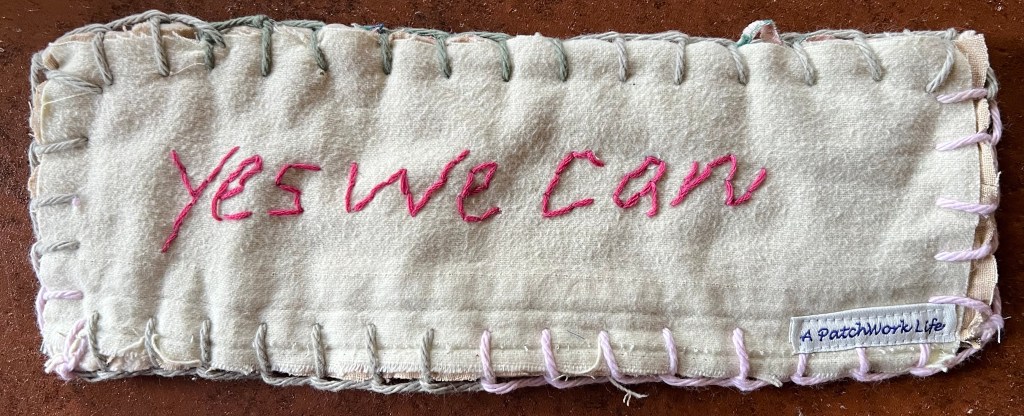
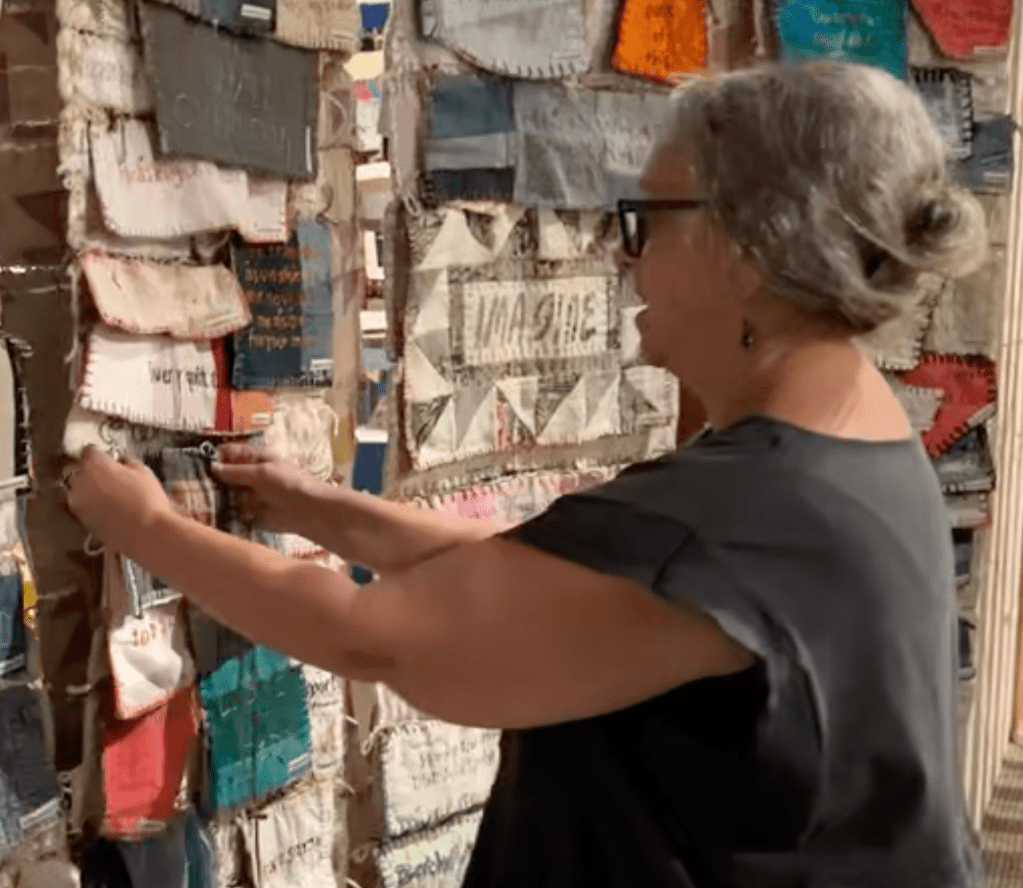
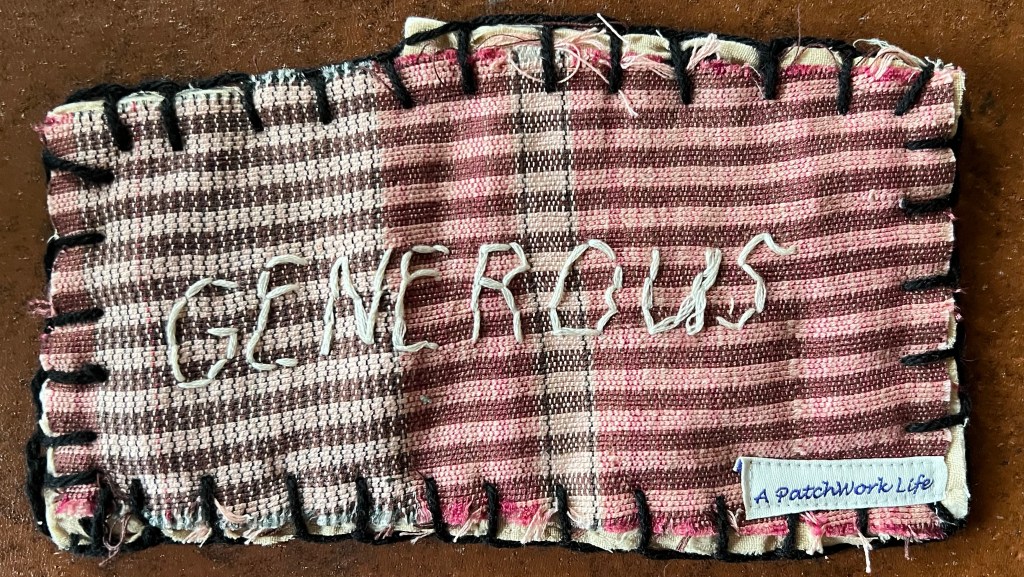
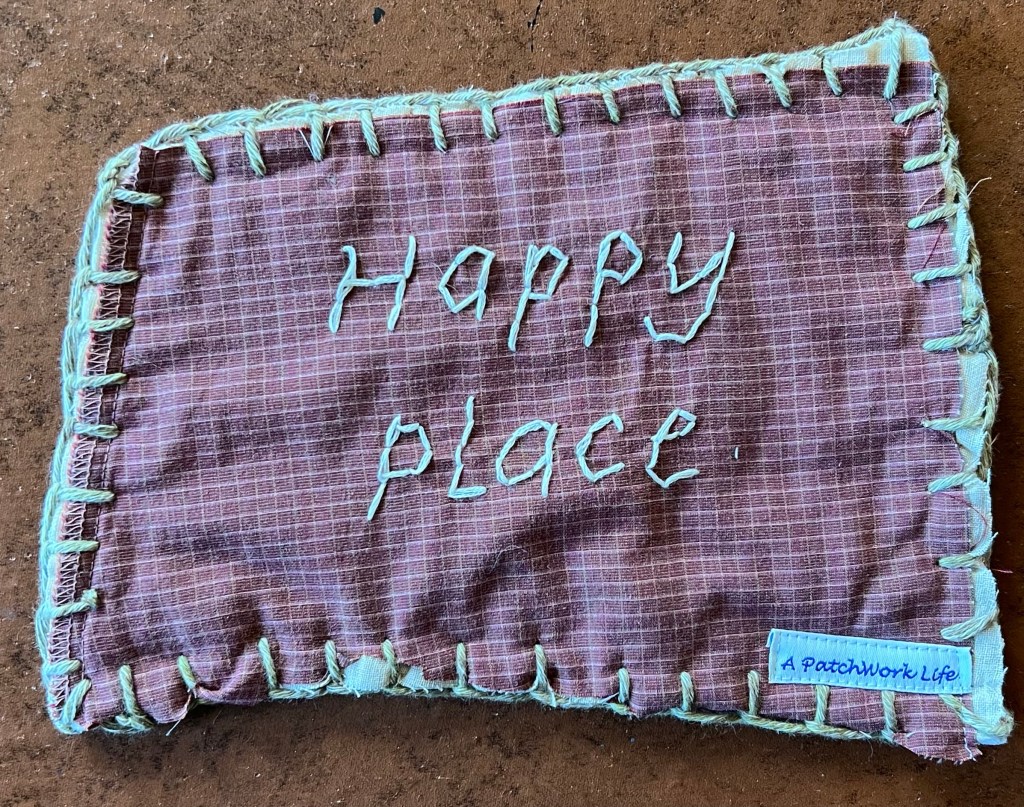
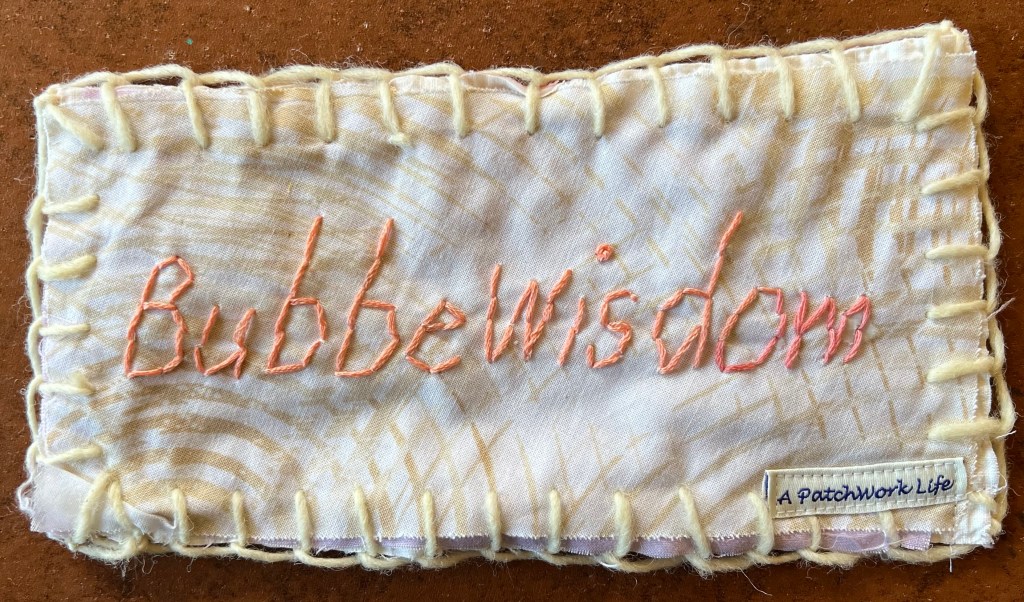
This underlayer is current hidden beneath hundreds of Bubbe Wisdoms, folk sayings hand stitched onto recycled fabric. It will slowly become revealed next year, starting in mid-February, when the Witness Quilt begins to be dismantled.
Today, along with the first anniversary of October 7th, we observe The Fast of Gedaliah. This year, both occur during the Ten Days of Teshuvah between Rosh Hashanah and Yom Kippur. I used the occasion of this fast day, some twenty-four years ago to enact: Moving Through Loss: A Wise Woman Ritual.
This day advocates The Thirteen Attributes of Mercy whenever we need divine compassion.
Adonai is always merciful, even when (and we will) go astray.
El has power over nature and humankind, indicating that mercy surpasses everything.
.Compassionate/rahum is filled with loving sympathy for human frailty even in extreme temptation.
Gracious/v’hanun shows mercy by consoling the afflicted and raising up the oppressed.
Slow to anger/ereh apayim gives us time to reflect, improve, and repent.
Abundant in Kindness/v’rav hesed tips the scales of justice toward the good.
Truth/v’emet rewards those who stay true.
Preserver of kindness for thousands of generations/notzeir hesed la-alafim allows the deeds of the righteous to benefit less virtuous generations.
Forgiver of iniquity (nosei avon) always for forgiveness when the sinner repents.
Forgiver of willful sin/pesha allows even those who commit a sin with the malicious intent, the opportunity to repent.
– Forgiver of error/v’hata’ah forgives a sin committed out of carelessness, thoughtlessness, or apathy.
– Who cleanses/v’nakeh is merciful, gracious, and forgiving to those who repent.
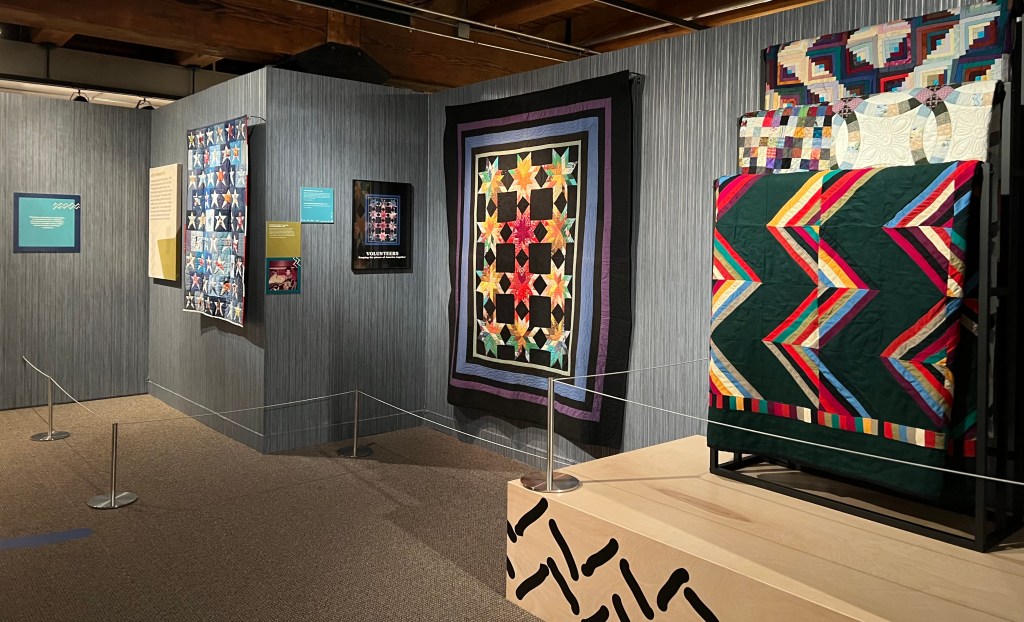
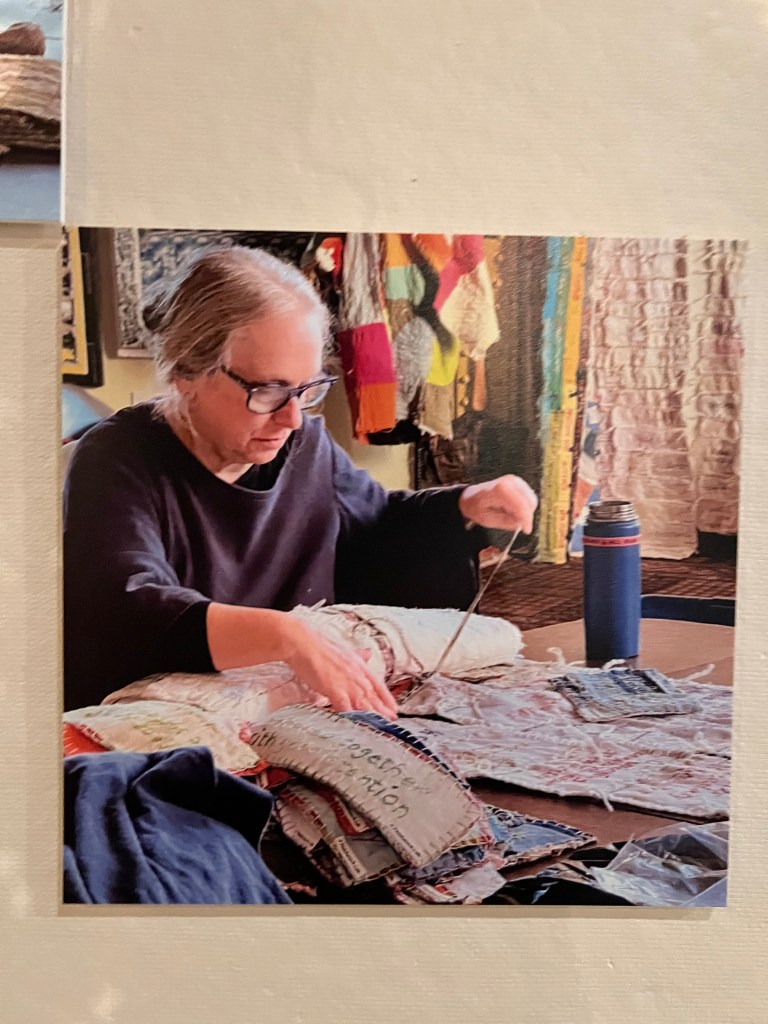
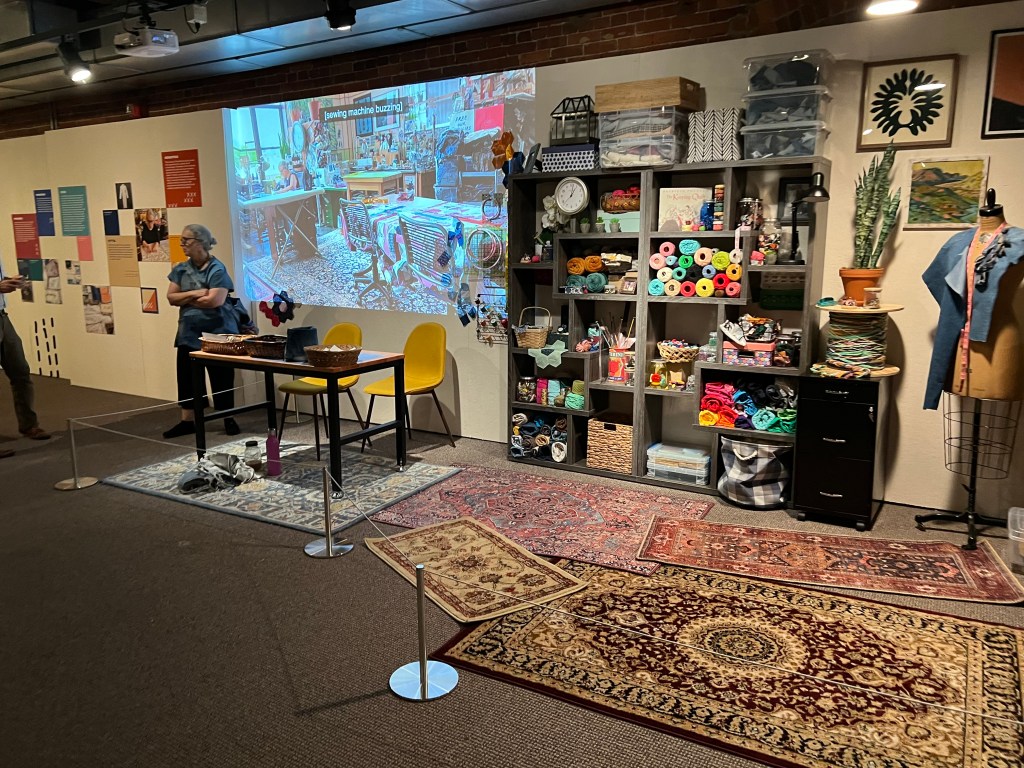
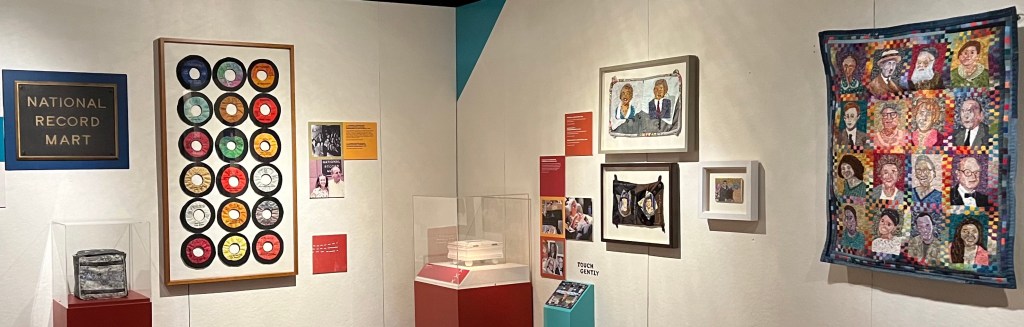
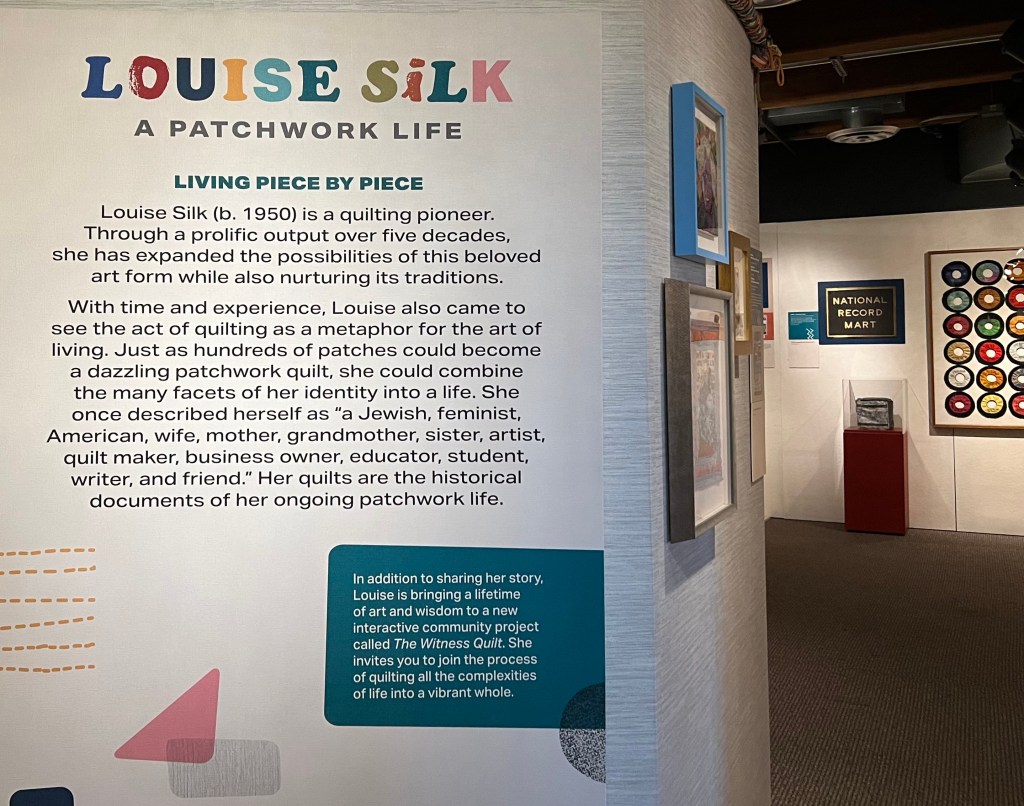
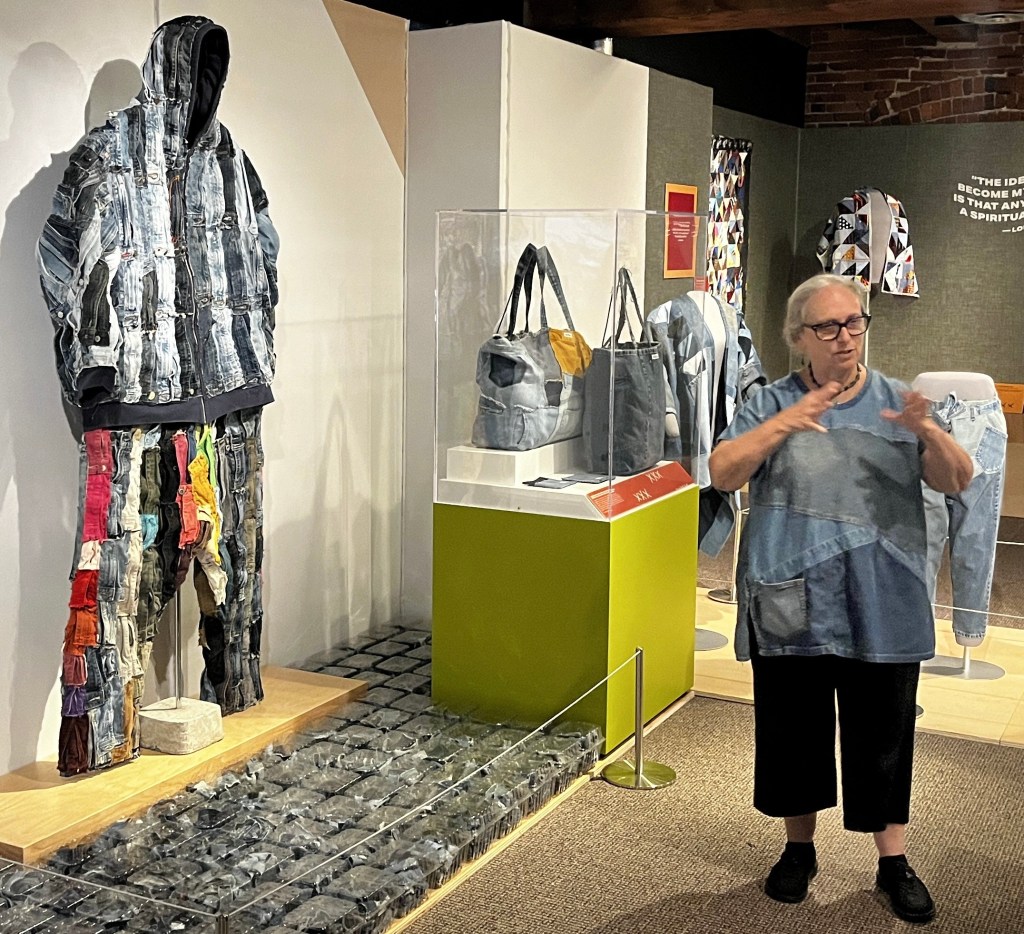
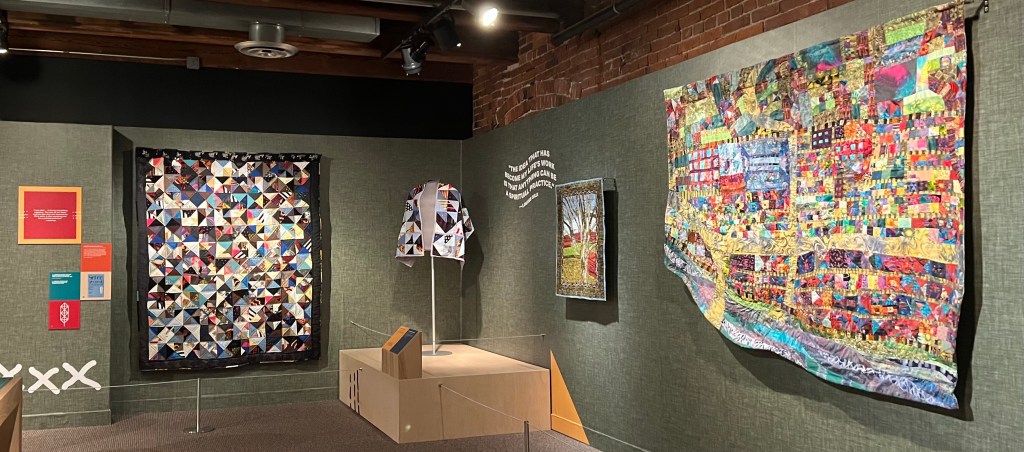
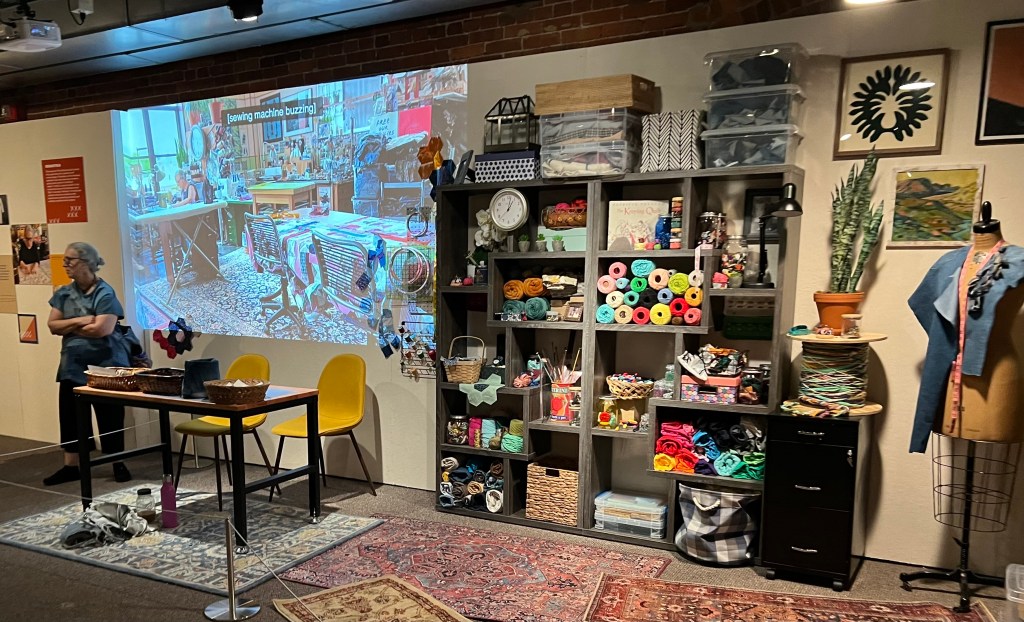
I always had the idea of working in a gallery where my work was installed. It seemed the best way to understand the viewer’s point of view. With Louise Silk: A Patchwork Life I am doing just that- sitting at the work table in the History Center.
Here are some of your most asked questions and my answers:
Question: How old is this artist? Answer: You mean me? I am the artist. I am 74. 74 in Hebrew letters means Witness and that is how we came to name the installation quilt in the exhibit The Witness Quilt.
Question: Those French Knots are amazing.How do you do that? Don’t you find the work tedious? Answer: I approach it like a meditation. Each knot is singularly precious. Doing the portraits is an exploration of my heritage and all that it has offered me. I use a double strand of regular metrosene sewing thread. Each hue includes 5 values from light to dark. If you want to see more about the Through the Generations piece you can us this link to learn more.
Question: What are you working while you are there? Answer: The Witness Quilt is a Community Quilt. We will be adding individual patchworks to the piece until 8 weeks before the end of the exhibit when we start to disperse all of the pieces to the viewers coming through the exhibit. When the exhibition closes on April 6, 2025, The Witness Quilt will be totally disseminated to the community.
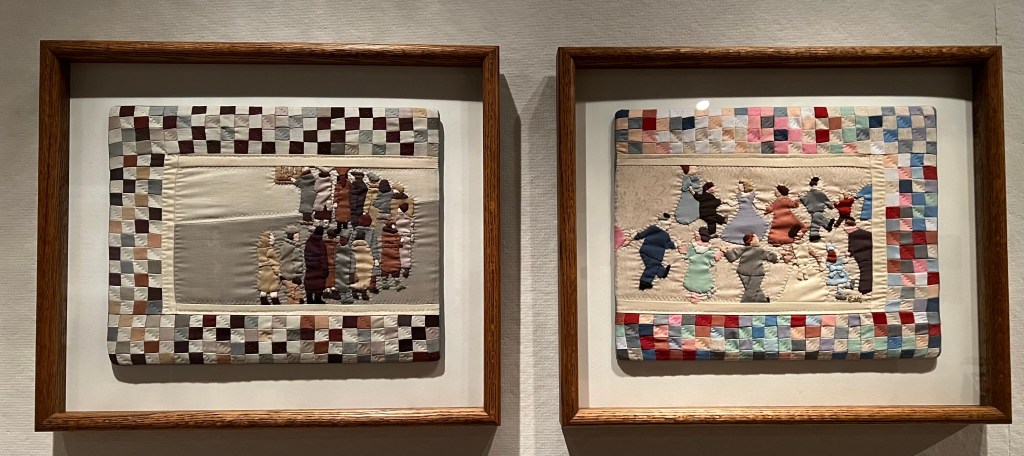
Question: Can you explain the piece The Home Coming? It seems important in the story. Answer: This was the first piece where I realized I could apply meaningful concepts to my stitching and in doing so add more meaning to my work.
Question: How did this exhibit come about? Answer: I began a series of discussions with the History Center in 2021. After that, the curator, Eric Lidji, and I began by going through all of my papers, then writings, & then quilts. Eric established the basic themes and developed the initial script, fitting my life into an historical timeline of major changes in crafts, women, Judaism, & reuse. Then the History Center teams of curation, script, archives, design, preservation, installation, education, programming, & communication, built and mounted the exhibit.
Question: Are you at the table all the time? When will you be there next? Answer: I come twice a week, as it fits my schedule. If you want me to be there at a certain time, email me at louise@silkquilt.com and I will try to accommodate your request.
I. Set Up: Complete the script. Give over the objects. Ask for what is needed. Not a retrospective, a quilt display, nor a one-person art exhibition; it is the herstory of acquiring deep knowledge and skills through a series of significant life events. Another step on a long arduous journey, beginning without a 70th birthday celebration due to covid.
II. Intention: Take a view as vast as space and actions as fine as thread. Think outside the box, even better without a box. Apply core values to modern circumstances. Dedicate equally to tangible and intangible. Recognize the fluidity of form where nothing is fixed and there is a world synchronicity. Transform continually.
III. Formation: Self-Care enables care of others. Lead with honesty. Incorporate flexibility. Own talent & skills. Include community. Listen & speak feelings & emotions. Face fears, break habits, include the unseen. Be with impermanence & nonattachment.
IV. Attributes: Big picture vision. Always say yes. Ahead and to the left. Diving deeply. Value process over product. Reticent to get involved yet too quick to jump in. Understanding derived through personal experience. Transcending words and concepts. Big hearted generosity and kindness. Gratitude.
V. Tools: Connect with spirit. Deconstruct. Release misconceptions. Let be whatever arises. Seek to uncover what is unseen and already there. Bring others into the vision. Tell stories. Scan the body. Let go of resistance. Create rituals. Reflect with more of the heart and less of the mind. Do something even if it is small. Be dedicated. Be responsible. Look for practical solutions. Go from being to doing and back again.
VI. The Work: Apply all 10 attributes. Move between worlds. Be the change you wish to see in the world. Transform personally. Combat prejudice. Advocate social justice. Find resources. Accept support. Admit mistakes. Find peace of mind in the present moment. Try.
VII. Mission Statement: Celebrating the loving and healing capacity of spirit while piecing together philosophical values, physical consciousness, psychological emotions, ephemeral spirit to improve the likelihood of right action, in the right way, at the right time. Combining moral knowledge and common sense to encourage human effort and enhance the quality of life for all beings.







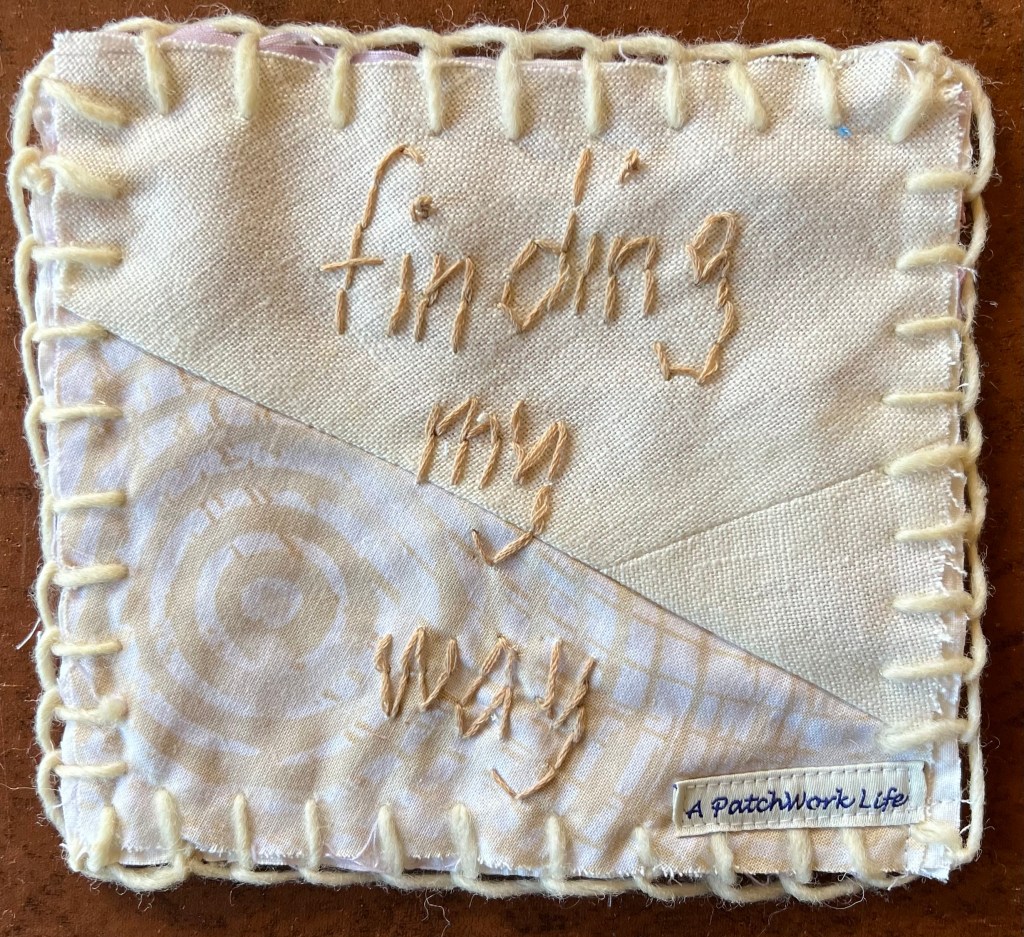


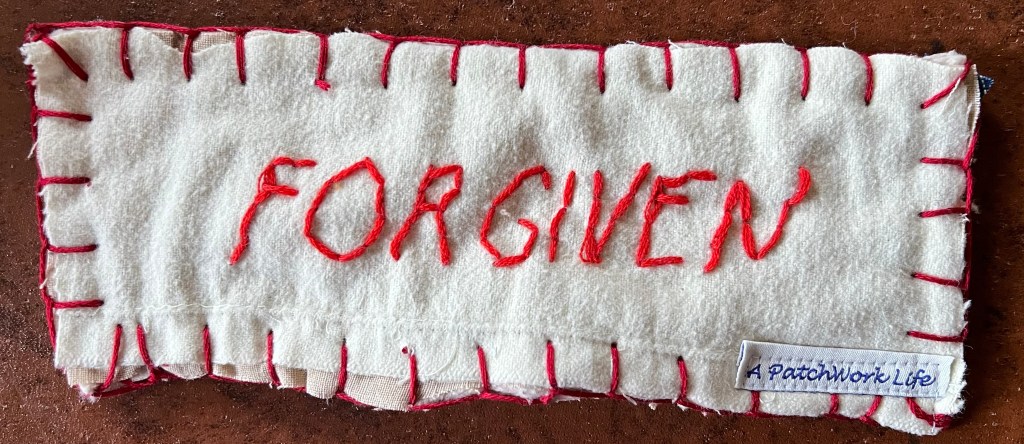
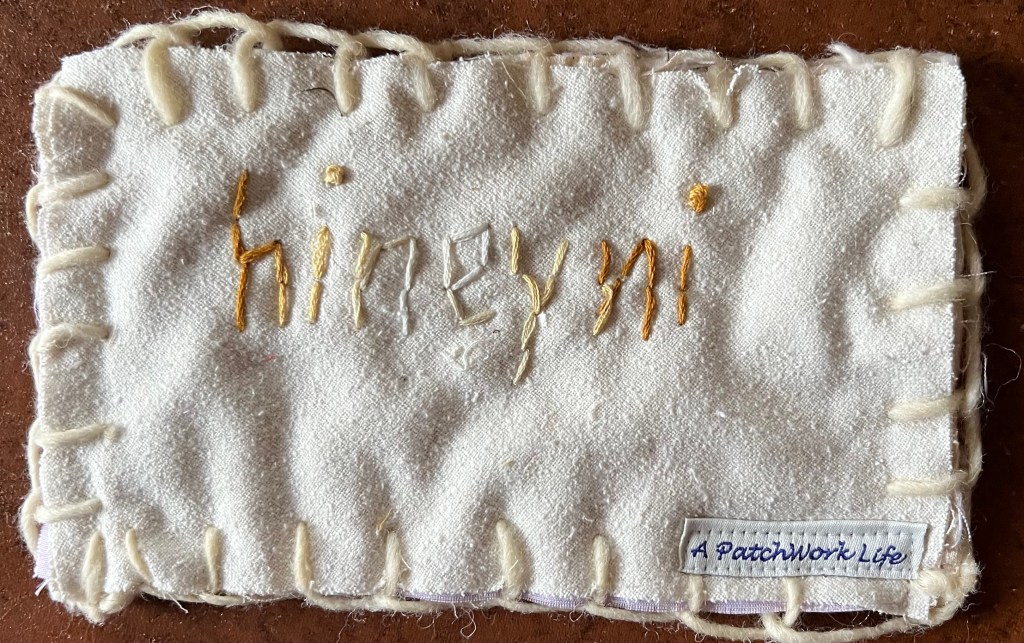
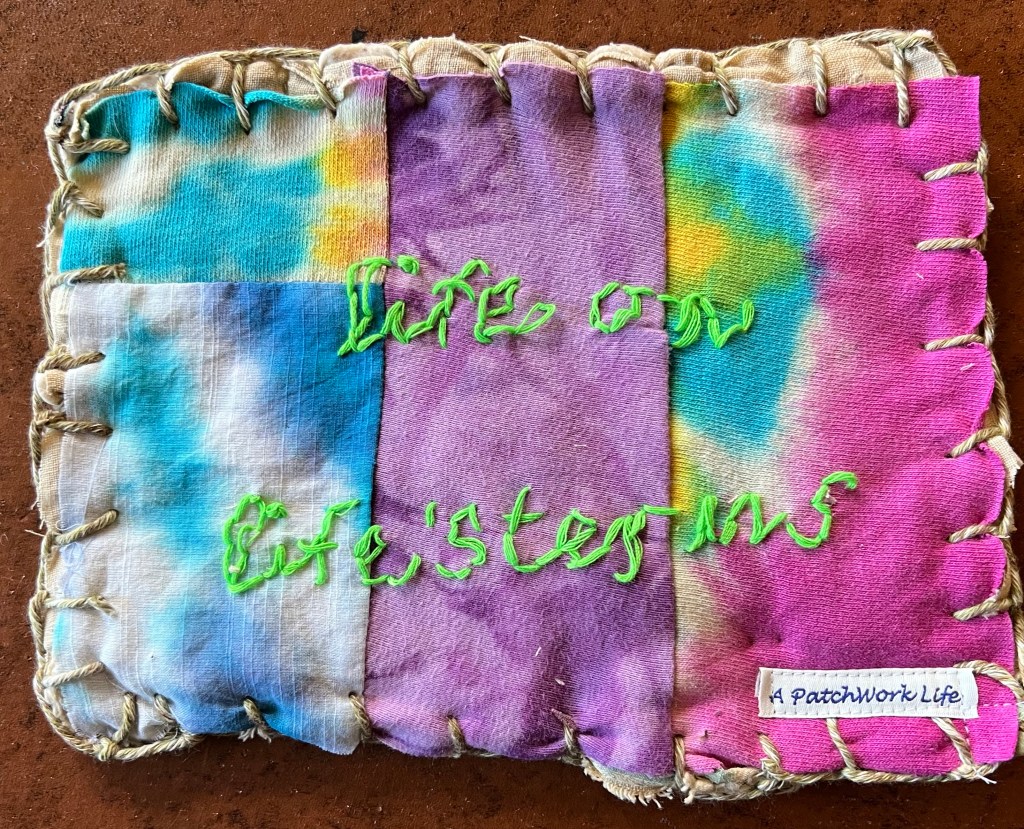
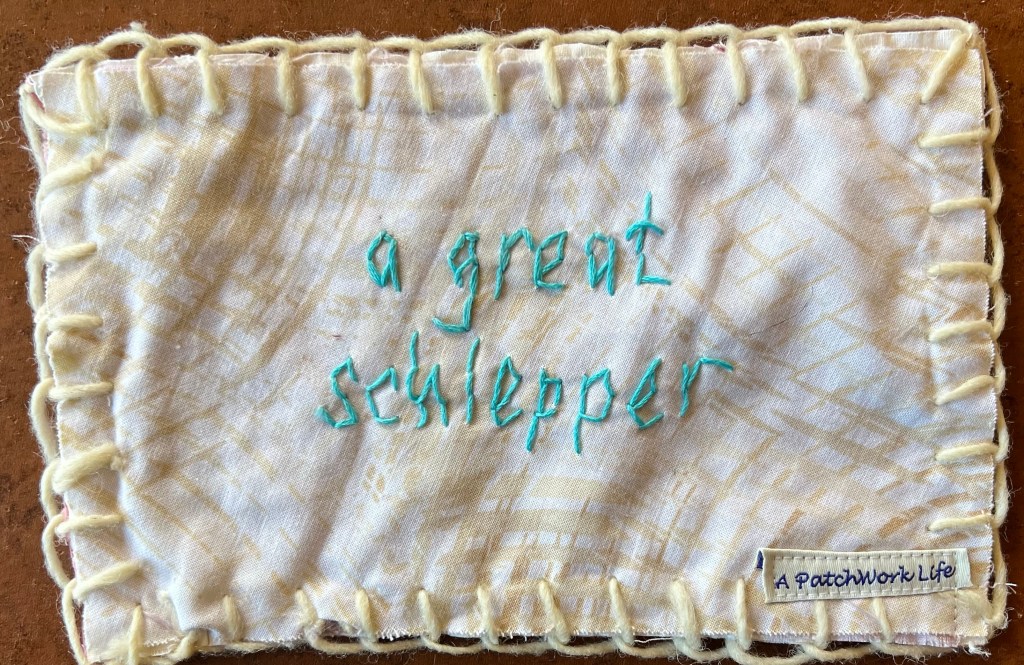
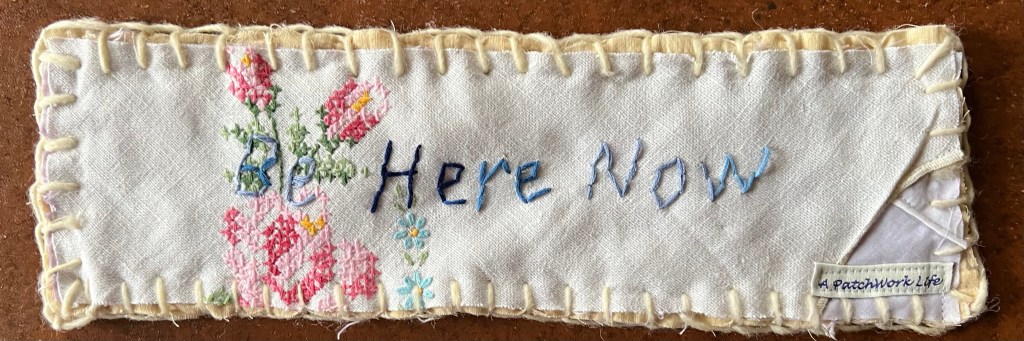
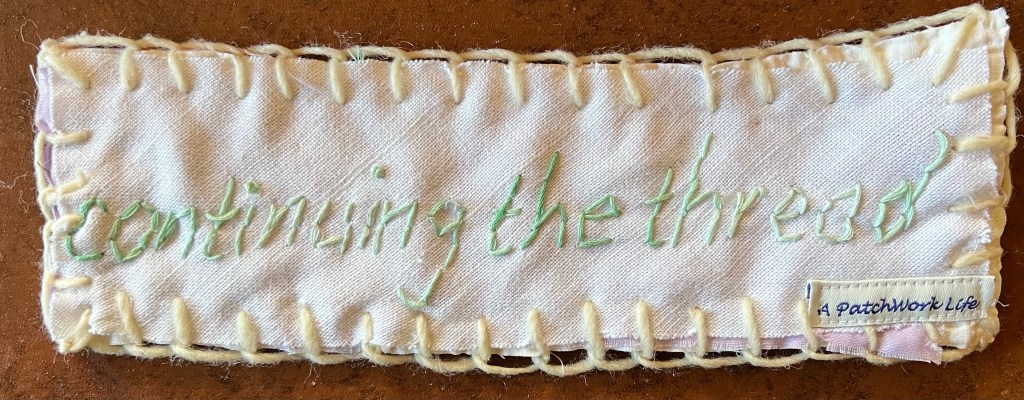
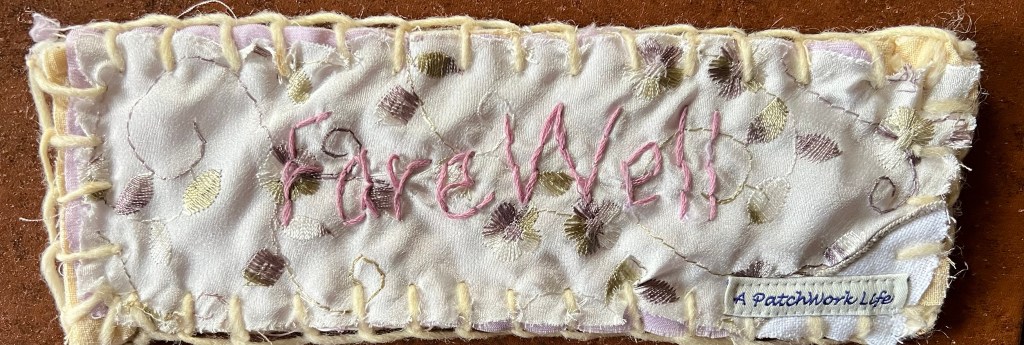









 BubbeWisdom